

Waste concrete refers to concrete blocks generated from the demolition of buildings and structures, road surface repair, concrete production, engineering construction, or other conditions. After being treated by professional aggregate processing equipment, waste concrete is crushed and processed; the aggregate with a particle size larger than 5 mm is defined as recycled coarse aggregate, and the aggregate with a particle size smaller than 5 mm is defined as recycled fine aggregate. The entire process relies on well-matched aggregate processing equipment to ensure the basic quality of recycled aggregate.
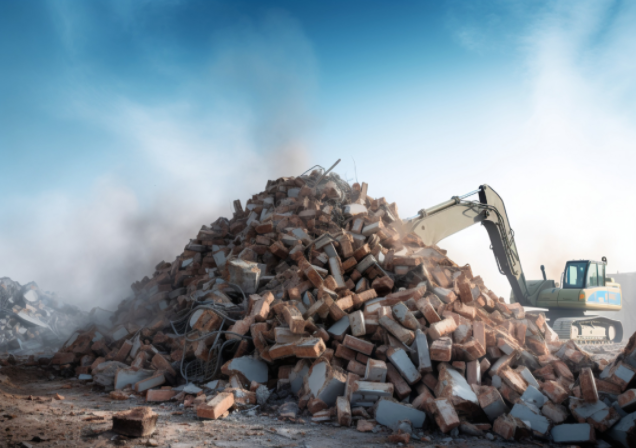
Numerous studies at home and abroad have shown that recycled aggregate from waste concrete has higher water absorption, needle-flake particle content, and crushing index than natural aggregate. Although its apparent density, bulk density, and soundness are lower than those of natural aggregate, it basically meets the requirements for coarse aggregate specified in GB/T 25177-2010 Recycled Coarse Aggregate for Concrete and can be used to produce recycled concrete. The basic engineering properties of recycled aggregate are affected to a certain extent during the operation of aggregate processing equipment, so reasonable configuration of aggregate processing equipment and production processes can be adopted to improve these properties.
The production processes of an aggregate production line for recycled aggregate from waste concrete are similar: different cutting equipment, crushing and screening equipment, conveying equipment, and impurity removal equipment are combined organically to jointly complete processes such as crushing, screening, and impurity removal, finally obtaining recycled aggregate that meets quality requirements. A well-designed aggregate production line can effectively improve the efficiency of recycled aggregate processing and ensure product stability.
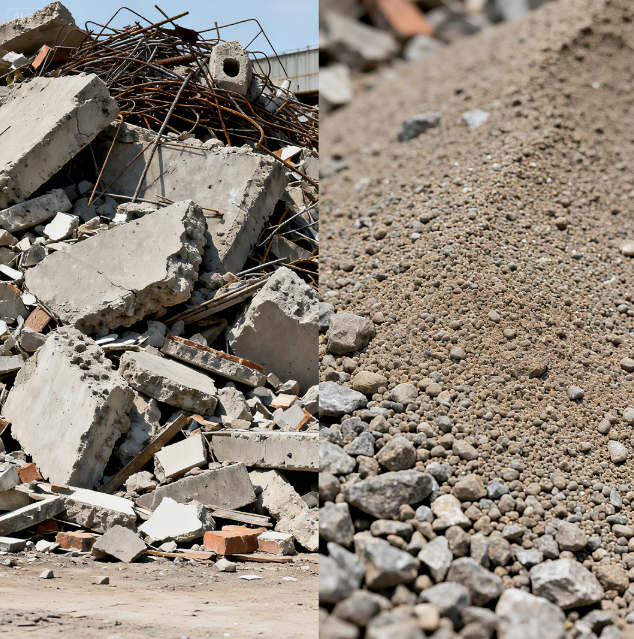
Practice shows that recycled aggregate produced by simply using the crushing unit of crushing and screening equipment (such as a jaw crusher) to crush waste concrete has many angular particles and a rough surface, with hardened cement mortar attached. In addition, a large number of microcracks are formed inside due to damage accumulation during the crushing process of crushing and screening equipment, resulting in high porosity, high water absorption, low bulk density, and high crushing index of recycled aggregate. Meanwhile, concrete prepared with such recycled aggregate requires a high water demand and exhibits low strength and low elastic modulus. Its durability, including impermeability, frost resistance, carbonation resistance, shrinkage, creep, and chloride ion penetration resistance, is also relatively poor, which is unfavorable for the popularization and application of the product and the long-term operation of the aggregate production line.
To improve the properties of recycled aggregate from waste concrete and optimize the operation effect of the aggregate production line, it is necessary to introduce professional aggregate shaping and sand making plant for shaping treatment on recycled aggregate. The aggregate shaping and sand making plant is specially designed to improve the quality of aggregate, making up for the defects of traditional crushing and screening equipment in aggregate processing.
Sand Making Plant for Converting Waste Concrete into Recycled Aggregate
Ninon has successively launched the VSI crushers, which are core equipment of the aggregate shaping and sand making plant. All products of this series adhere to a simple and elegant design philosophy, adopting mature and reliable manufacturing processes, which can perfectly integrate into the aggregate production line. Wear-resistant and high-temperature-resistant materials are selected for core components to ensure long-term stable operation in the harsh working environment of the sand making plant.
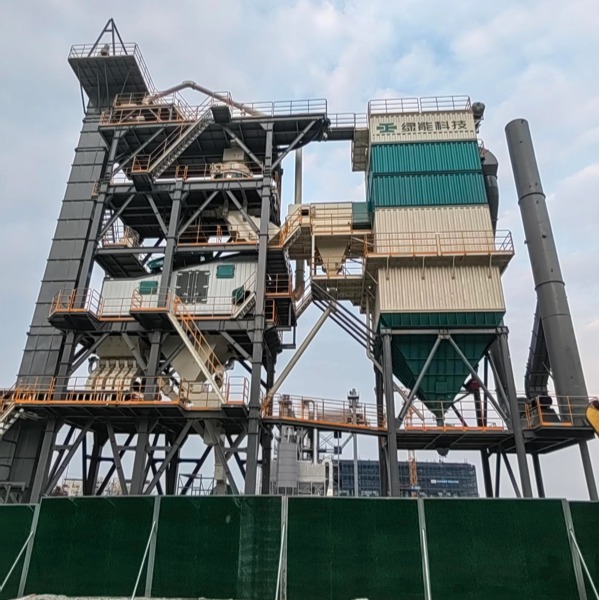
Sand Making Plant
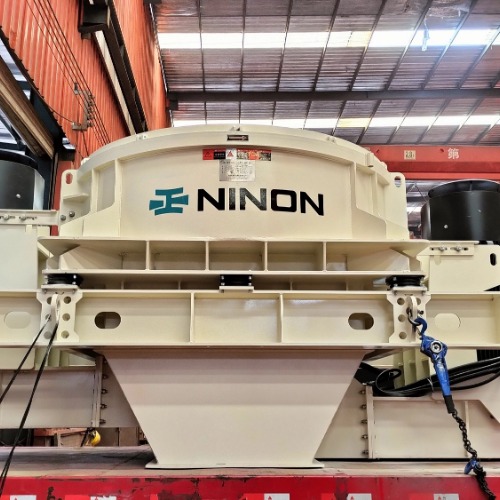
VSI Crusher (double)
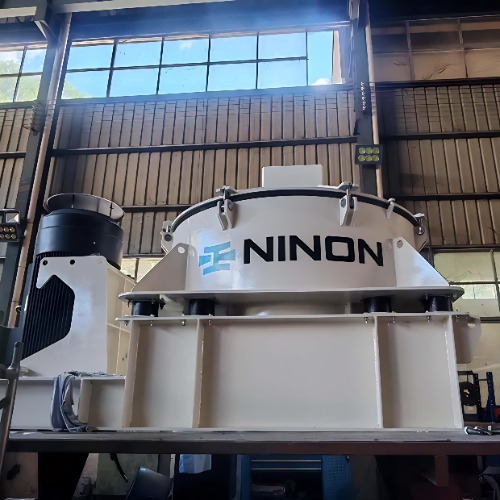
VSI Crusher (single)
The VSI sand making plant, feature an attractive and robust appearance with a compact and precise internal structure. Adopting the “rock-on-rock” crushing principle, they achieve efficient aggregate shaping and crushing, which is an important supplement to the functions of crushing and screening equipment in the aggregate production line. These machines can provide high-quality sand and aggregate for highways, high-speed railways, high-rise buildings, municipal construction, hydropower dam projects, and concrete batching plants, making the aggregate production line more competitive in the market.
After being processed by the VSI sand making plant, recycled aggregate from waste concrete features a relatively smooth particle surface and excellent particle shape with low content of needle-like and flaky particles. The proportion of recycled fine aggregate increases, the gradation becomes more reasonable, and the content of microcracks is reduced. Meanwhile, the bulk density and compact density are improved, while the porosity and crushing index are decreased. This not only optimizes the performance of recycled aggregate but also enhances the overall efficiency of the aggregate processing equipment and the aggregate production line.
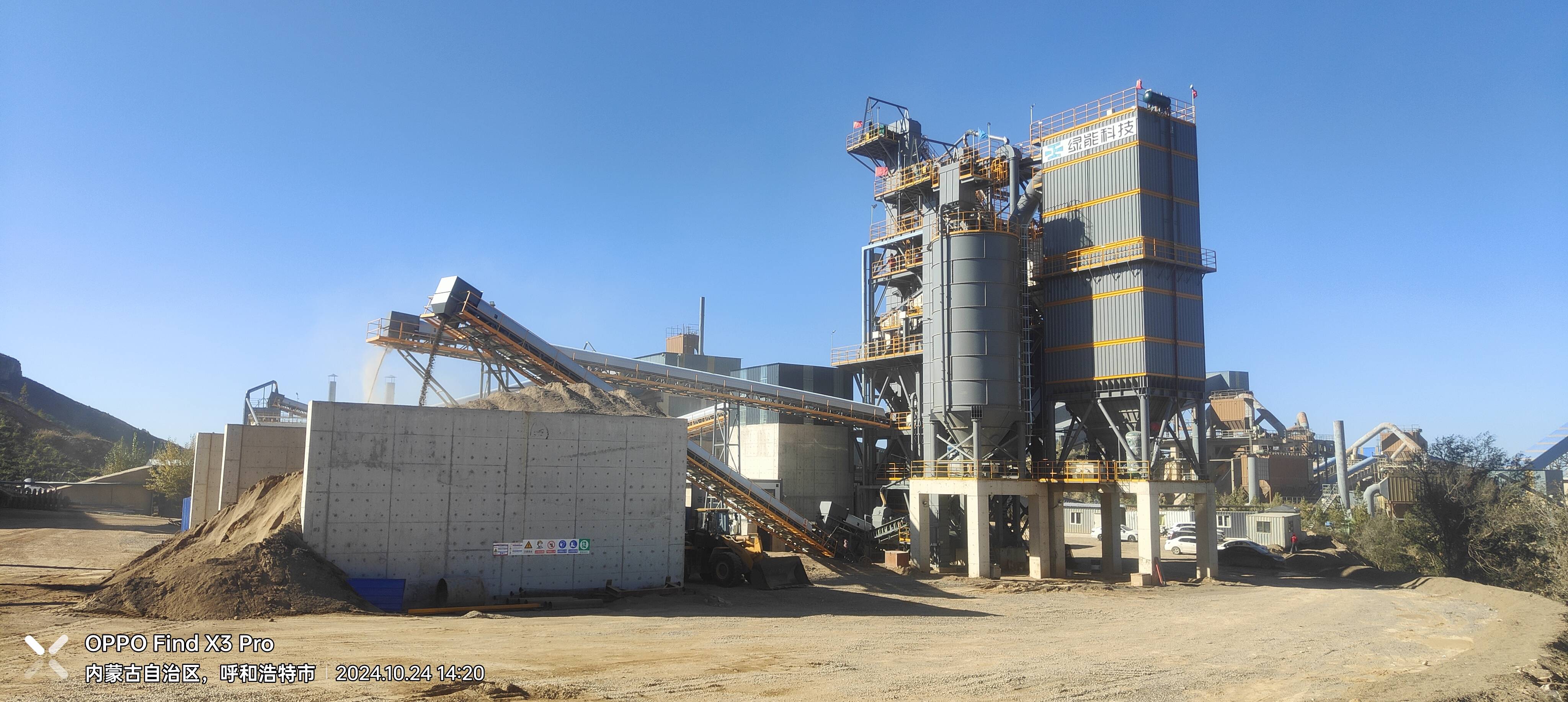
Ninon Sand Making Plant Applied in Inner Mongolia
In short, the performance indicators of recycled aggregate from waste concrete are comprehensively optimized through the joint action of crushing and screening equipment, aggregate processing equipment, and the aggregate shaping and sand making plant, and its utilization value is greatly enhanced. This contributes to the development of green concrete, promotes the rational use of the aggregate production line, and realizes the sustainable development of construction resources and the environment.