

Existing Bottlenecks in Current Wet Soil Remediation Equipment
With the rapid advancement of urban construction, the resource utilization of engineering solid waste has become a key priority across the industry. Classified by origin, soil properties and application scenarios, engineering soils fall into categories including modified soil, planting soil and stabilized soil. Their standardized treatment process consists of five core procedures: raw material pretreatment, crushing & deagglomeration, homogenization conditioning, mixing and finished product discharging.
Solid waste materials widely treated in the industry are massive lumpy fills featuring high moisture, high viscosity and mixed impurities, including marine silt, coastal excavated soil, engineering dug soil, stockpiled dredged sludge and industrial sludge. Most enterprises still adopt the traditional excavator-based lime blending process, which suffers from low operating efficiency, high labor costs, large land occupation and poor environmental performance, failing to meet the requirements of modern eco-friendly construction.
Ninon Waste Sludge Solidification Equipment Upgrade Your Production Efficiency
To address these prominent industry pain points, Ninon has developed waste sludge solidification equipment through numerous rounds of tests and iterative upgrades, perfectly matching the resource recovery demands of various waste soils.
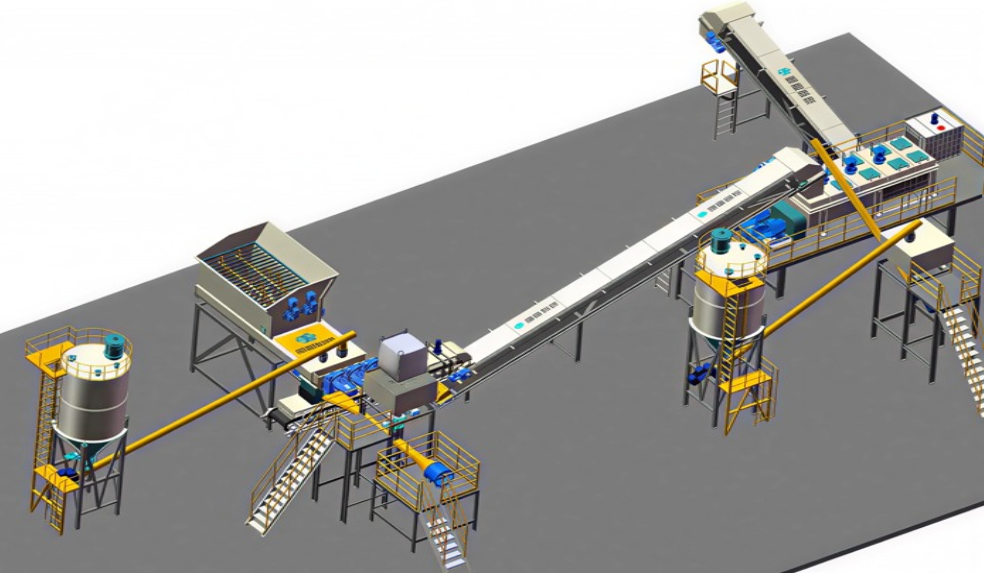
The wet soil remediation equipment can be flexibly configured according to raw material characteristics and finished product applications, with four core modules: pretreatment, homogenization continuous twin shaft mixer mixing, crushing and precise batching. Key components include coarse crushers, mud disintegrators, continuous twin shaft mixers, vibrating screens, air separators, as well as metering and conveying systems for stabilizers and moisture-reducing additives.
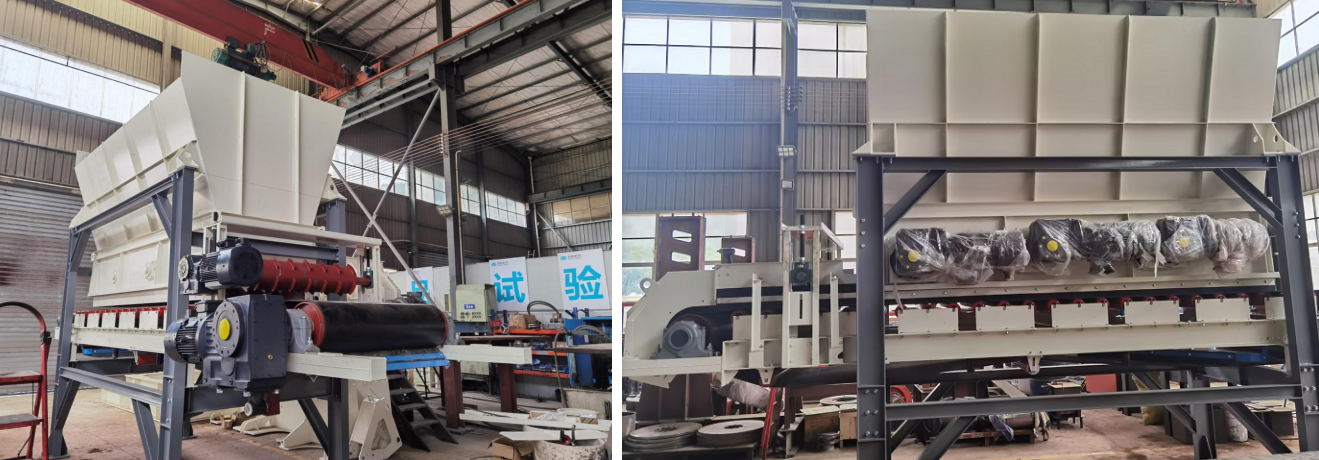
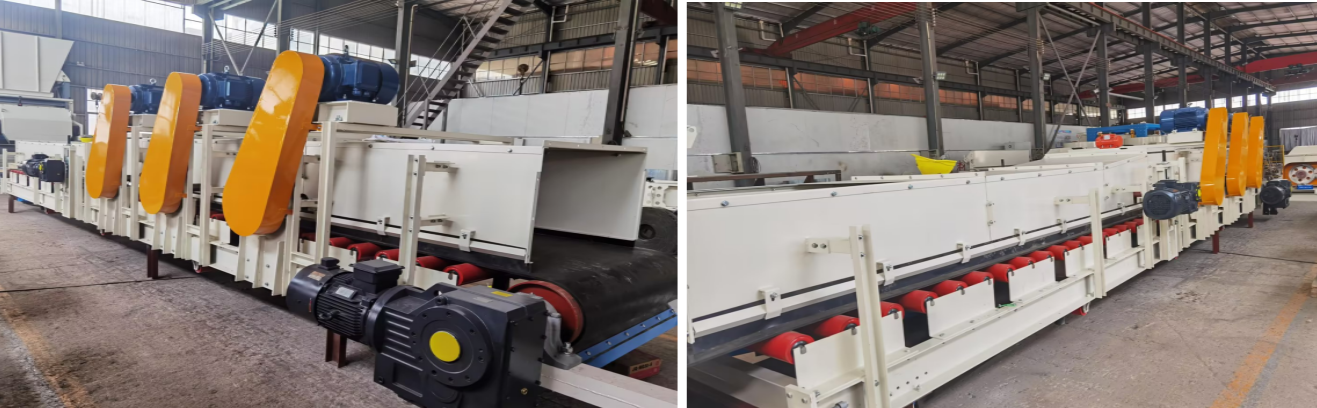
Sanding Belt Conveyor Unit
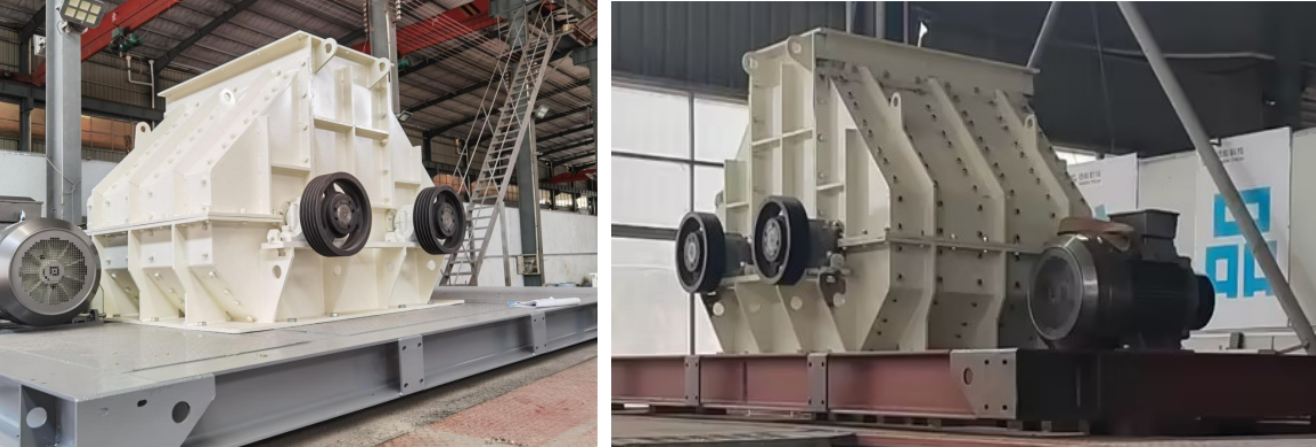
Hammer Crusher
Ninon Wet Soil Remediation Equipment Treatment Process
The waste sludge solidification equipment is equipped with a proprietary continuous twin shaft mixer with an integrated self-cleaning structure, the continuous twin shaft mixer adapts to diverse waste soils via adjustable inclination, rotating speed and mixing blades.
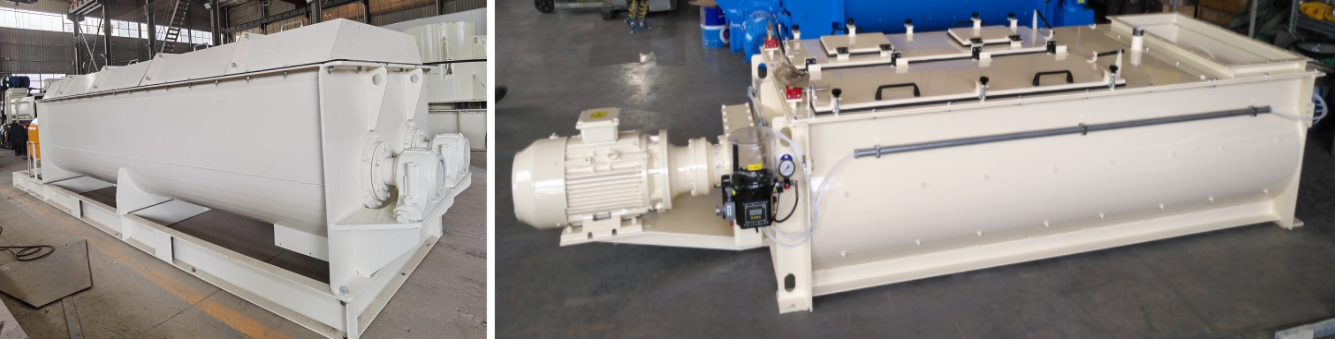
Ninon Continuous Twin Shaft Mixer
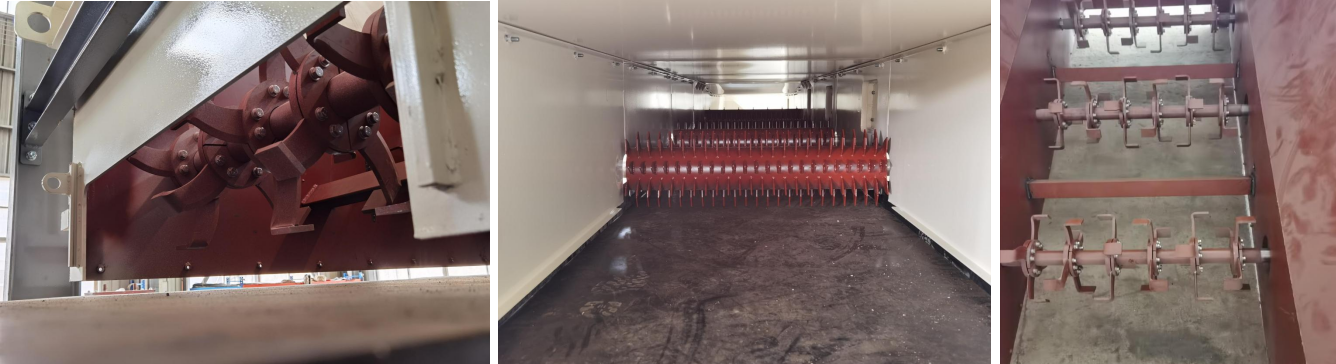
Blades (Deagglomeration & Arch-Breaking, High-Speed Cutting, Arch-Breaking Rotary Tiller)
During operation, moisture-reducing and viscosity-lowering additives are first added to deagglomerate and preliminarily crush raw materials into uniform small lumps. The materials then flow through a steady-flow homogenizing drum for further conditioning, followed by crushing to reduce particle size and cut cohesion. Multiple homogenizing mixing drums with cutting blades perform secondary refining. After precise feeding via a weighing belt, materials enter the continuous twin shaft mixer together with stabilizers for thorough blending. The finished mixture is conveyed outward for stockpiling or on-site compaction.
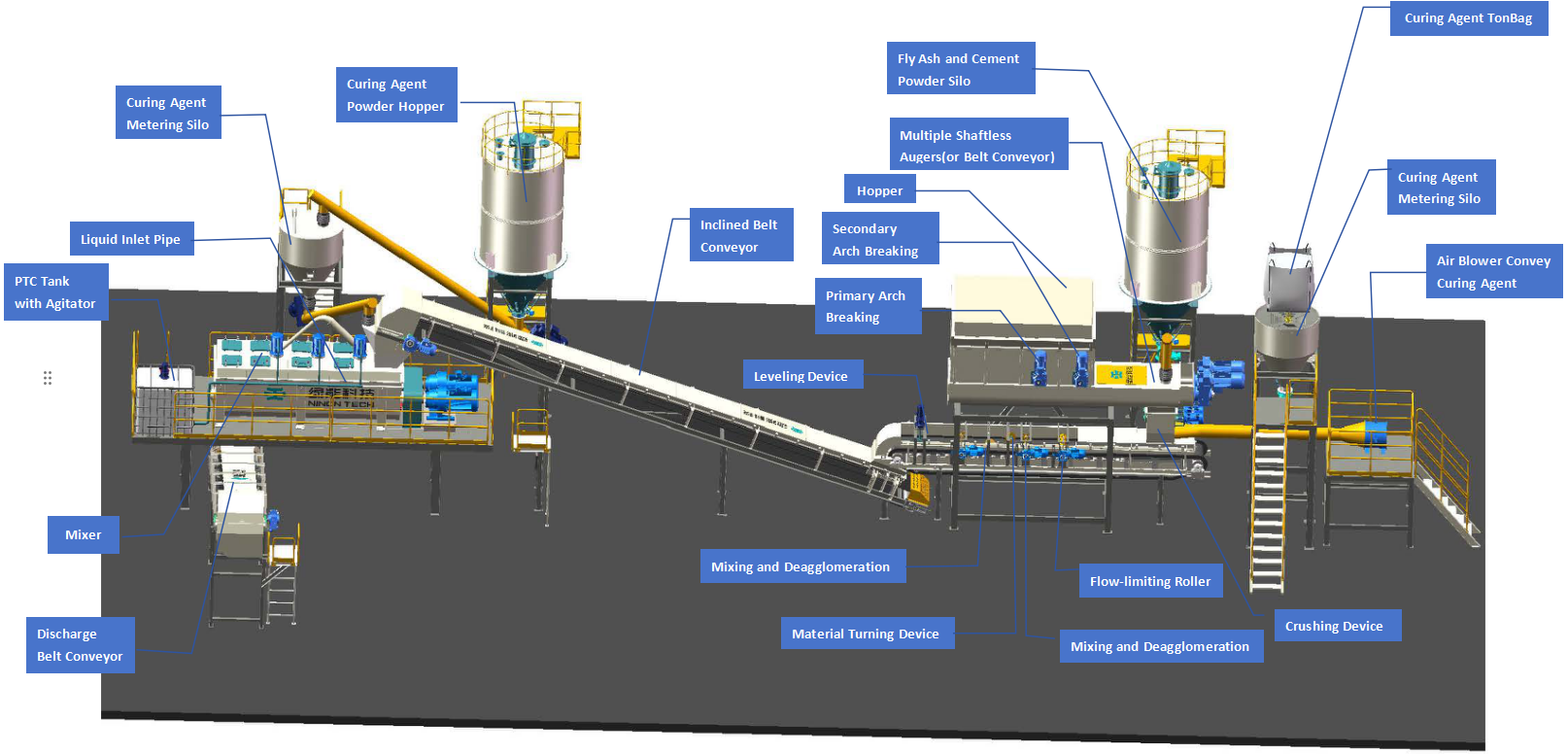
Explanatory Notes of Ninon Stabilized Soil Production Line
The wet soil remediation equipment efficiently processes impurity-free wet clay and sludge filter cakes, delivering finished products with 90% of particles smaller than 20 mm; the particle size can be adjusted to below 10 mm upon request, delivering consistent quality for a wide range of engineering recycling applications.
 Cured sand samples: particle size <10 mm (Raw material: filter press clay cake with moisture content of 32% )