
Recycled Aggregate Production Line
The recycled aggregate production line is a production facility that processes solid wastes such as waste concrete, bricks and blocks through crushing equipment and sorting systems, converting them into usable sand and gravel aggregates. These aggregates can be used in concrete production, mortar preparation, and backfilling of foundations, achieving resource recycling with the support of integrated solid waste treatment equipment.
Process Overview
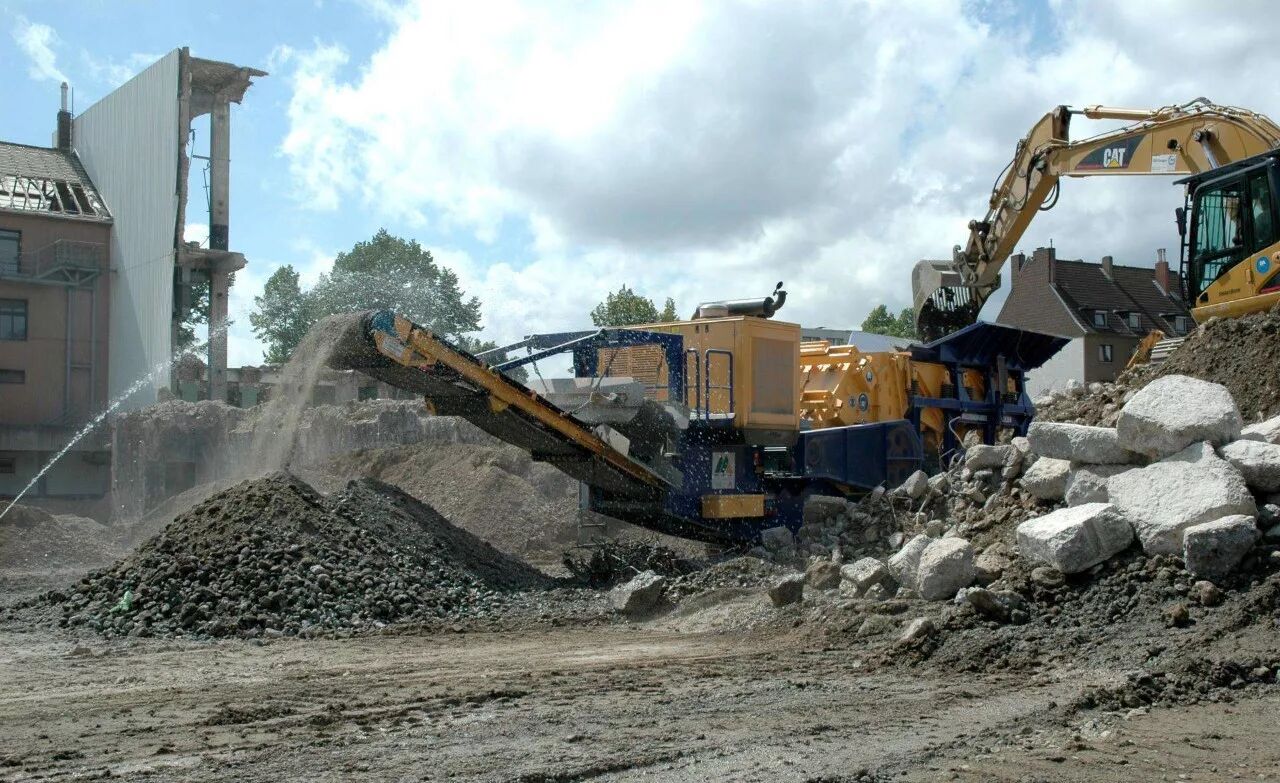
The recycled aggregate production line is mainly used to process construction demolition waste into usable finished sand and gravel aggregates, with typical aggregate gradations of 0–5 mm, 5–10 mm, and 10–31.5 mm. Since single-stage crushing via crushing equipment is unable to meet the required finished particle size specifications, and three-stage systems are commonly associated with excessive footprint and investment costs, two-stage crushing with solid waste treatment equipment not only satisfies the particle size requirements but also features a relatively simple process with controllable investment. Therefore, the aggregate production line usually adopts a two-stage crushing process, which mainly includes feeding, primary crushing, sorting, final crushing, and finished product screening stages.
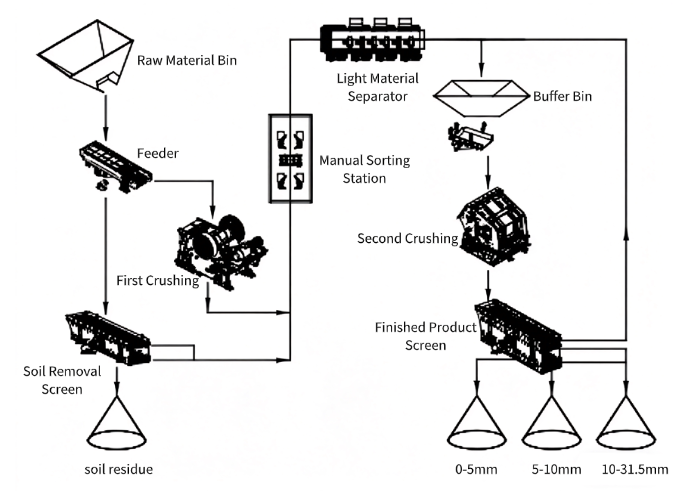
Recycled aggregate production line process chart
Construction solid waste raw materials are unloaded into the raw material bin by dump trucks (or loaders), then fed continuously and uniformly by a feeder integrated with solid waste treatment equipment. Large-sized materials enter the primary crushing stage via crushing equipment, while small-sized materials and soil fall into the hopper through the grate gaps of the feeder, and are transported to the soil removal screen via a belt conveyor for screening. The soil fraction is sent to the soil bin after screening, and the non-soil fraction is returned to the discharge conveyor belt of crushing equipment via a conveyor for subsequent processing.
Materials from the primary crushing stage are transported to the manual sorting section via a conveyor connected to the recycled aggregate production line. An iron remover is installed at the end of the conveyor to remove iron blocks, iron filings and other debris from the materials before manual sorting. In the manual sorting section, large debris is removed manually. The manually sorted materials are transported to the light material processor via a conveyor linked to the aggregate production line for air separation to remove light debris such as plastics, foams and small pieces of wood.
After air separation, the materials are transported to the secondary crushing system via a conveyor connected to solid waste treatment equipment. A buffer bin and feeder are generally installed before the secondary crushing equipment to ensure continuous and uniform feeding.
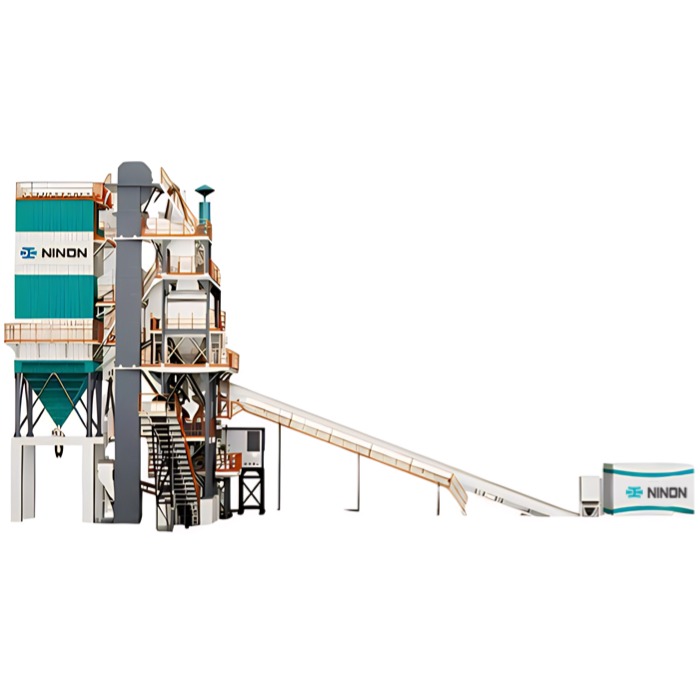
Aggregate Shaping and Sand Making Plant
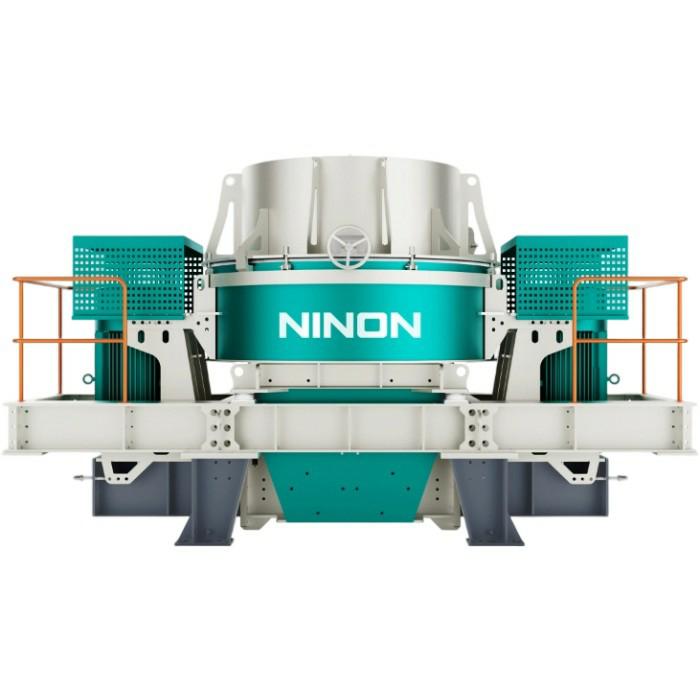
VSI Crusher
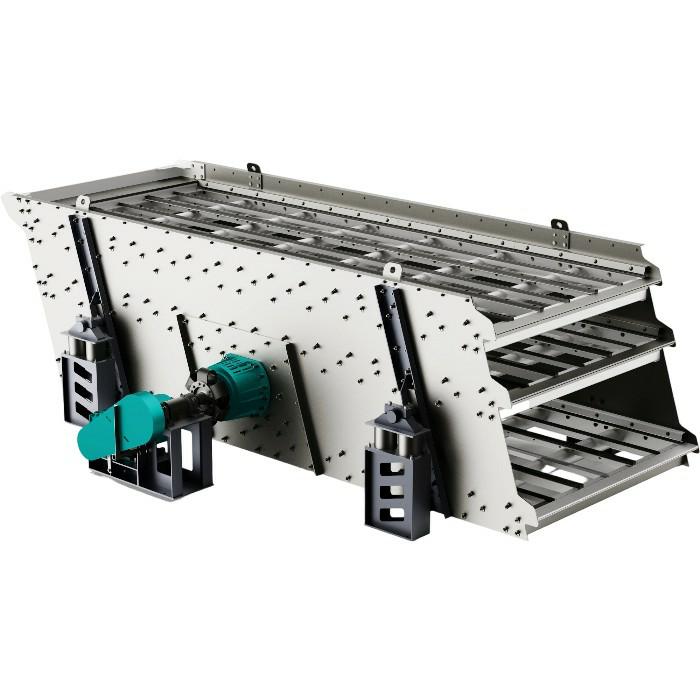
Circular Virating Screen
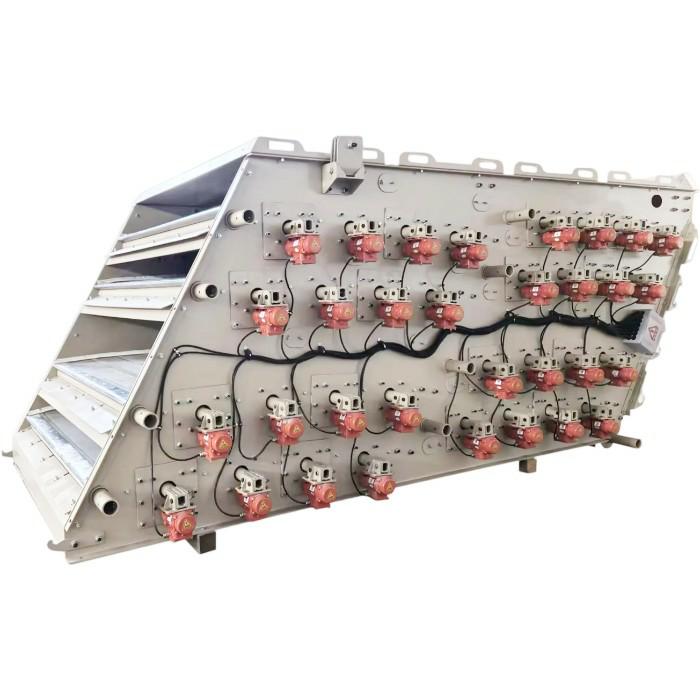
High-Frequency Vibrating Scrren
Materials after secondary crushing are transported to the finished product screen via a belt conveyor linked to the recycled aggregate production line. Finished materials that meet the particle size requirements are transported to respective finished product bins via different conveyors for use in the production of concrete products, etc. Materials that do not meet the finished product particle size requirements after screening are returned to the buffer bin via chutes and conveyors, and re-enter the secondary crushing system via crushing equipment. This cycle continues until all materials are converted into qualified finished aggregates.