

Dry mixed mortar is a mixture composed of cement, dry aggregates or powders, additives, and other components determined by performance requirements. These ingredients are precisely metered and mixed in fixed proportions in a professional production facility, and then mixed with water or matched components at the application site in accordance with the specified ratio before use. It is classified into two types by packaging: bagged and bulk.
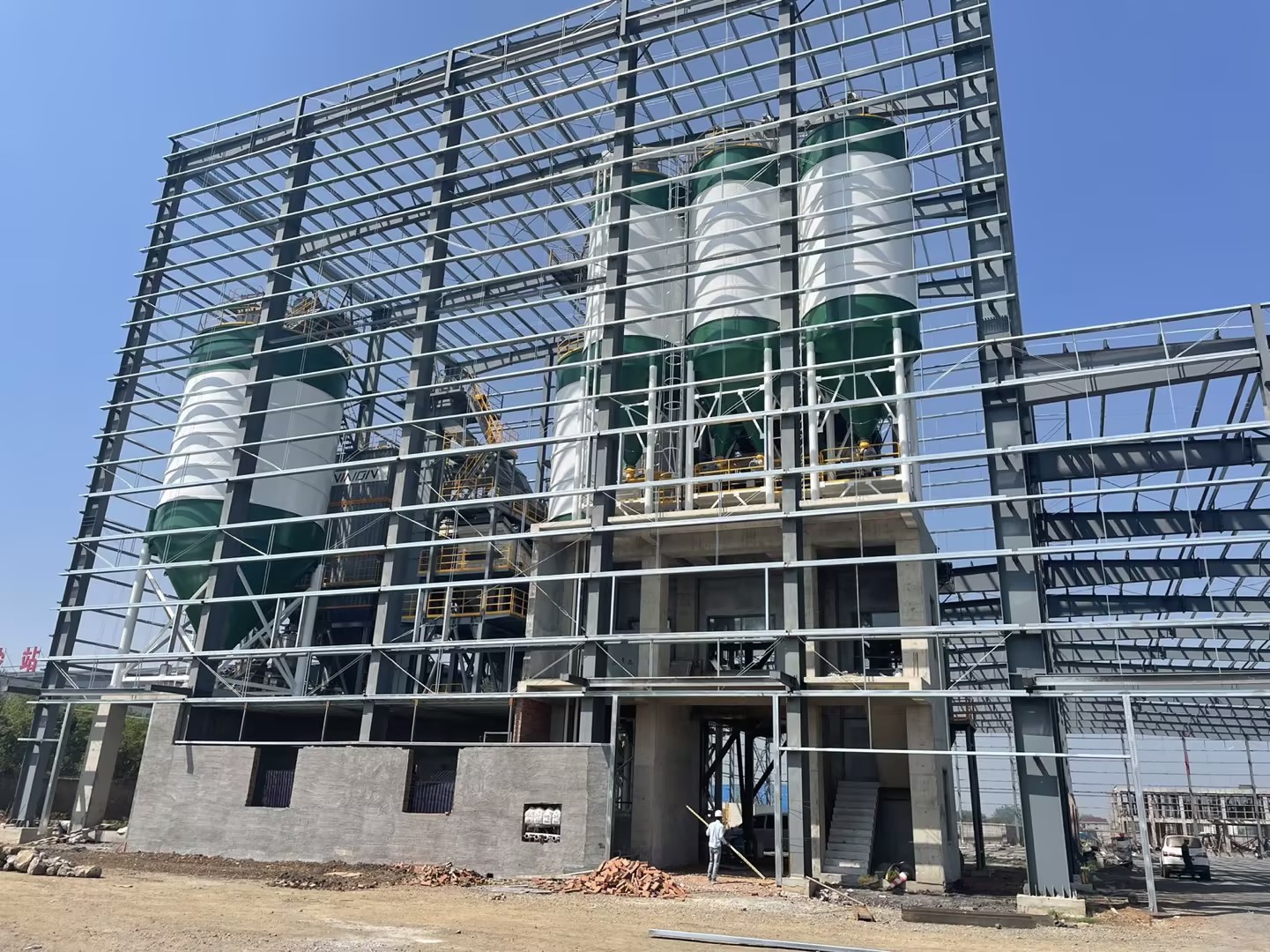
Quality Control of Raw Materials for Dry Mixed Mortar
To control the quality of dry-mixed mortar and improve production standards, the following aspects shall be well implemented:
(1) The cement used shall comply with the requirements of the current national standard GB 175-2007 General Portland Cement. The strength grade of cement shall be selected according to the requirements of mortar type and strength grade.
(2) Bulk cement should be preferred, and cement of the same manufacturer and brand should be adopted as far as possible. Frequent replacement of cement type and grade is not conducive to quality control, mastery and application, nor to the quality stability of dry-mixed mortar, which may easily lead to quality fluctuations of dry mixed mortar.
(3) Statistical methods shall be applied to conduct a comprehensive evaluation on the stability of cement, so as to assess the quality of cement comprehensively. The mix proportion design and adjustment basis of dry-mixed mortar shall be determined according to the actual statistical results.
Natural sand or manufactured sand can be selected as aggregates for dry mixed mortar. The particle size, gradation, mud content or stone powder content of sand as well as other harmful substances will exert varying degrees of influence on the quality of dry-mixed mortar.
Sand Speecifications and Its Impact on Dry Mixed Mortar
Excessively high mud content or stone powder content, as well as excessively small or large fineness modulus of sand, are likely to cause problems such as segregation, cracking and poor workability of dry-mixed mortar. Therefore, screening, classifying and storing sand for combined use is conducive to enhancing the quality stability of dry mixed mortar. Sand can account for up to 80% of dry-mixed mortar. It can be said that the quality of sand has a significant impact on the quality of dry-mixed mortar. In addition to the filling function, sand can also improve the workability and operability of mortar, reduce cement dosage, decrease hydration heat, minimize shrinkage and creep, and enhance wear resistance.
(1) Medium sand should be preferred, which shall comply with the requirements of the current industry standard JGJ 52-2006 Standard for Quality and Inspection Methods of Sand and Gravel for Ordinary Concrete, and all sand particles shall pass through the 4.75mm sieve. The mud content of natural sand shall be less than 5.0%, and the clay lump content shall be less than 2.0%. The stone powder content of manufactured sand shall be determined by tests according to the methylene blue (MB) value, and generally shall not exceed 12%.
(2) The moisture content of sand shall be less than 0.5%, the maximum particle size shall meet the requirements of the corresponding mortar type, and the fineness modulus shall be controlled within the range of 2.3–3.0. Indicators such as the fineness modulus of sand shall be adjusted in a timely manner according to customer requirements.
Mineral Admixtures for Dry Mixed Mortar
Scientific addition of mineral admixtures can not only improve the performance of dry mixed mortar, but also reduce its production cost and protect the environment. Commonly used mineral admixtures include fly ash, ground granulated blast-furnace slag, natural zeolite powder and silica fume, which should be reasonably selected based on mortar types and technical requirements.
(1) To ensure the quality stability of dry mixed mortar, priority should be given to large-scale mineral admixture manufacturers with relatively fixed supply sources and stable product quality.
(2) The quality of mineral admixtures shall comply with the requirements of relevant standards.
(3) Industrial solid wastes such as steel slag and phosphorus slag can also be used as mineral admixtures in dry mixed mortar after being ground into powder, but their application shall be determined through tests according to the characteristics of different materials.
Additives for Dry Mixed Mortar
Additives used by dry mixed mortar manufacturers are mainly water-retaining and thickening, anti-cracking materials. According to different performance requirements of mortar, admixtures such as water reducers, early strength agents, anti-freezing agents, waterproofing agents, retarders and air-entraining agents are also added. These additives feature small dosage, high price and significant effects, so quality control of additives is particularly important, and strict testing in accordance with standards must be carried out.
Production Process for Dry Mixed Mortar
(1) Sand Drying
In accordance with the relevant requirements of GB/T 25181-2010 Ready-mixed Mortar, the moisture content of sand used for dry mixed mortar shall be less than 0.5%. If the moisture content of sand is too high, the mortar is prone to caking during long-term storage, which affects its application. When using river sand for dry mixed mortar production, sand with high moisture content should be air-dried for a period of time before drying. When using manufactured sand for dry mixed mortar production, high-quality and dry stones should be preferred for crushing, and high-performance crushers should be selected to ensure that all indicators of manufactured sand, especially moisture content, stone powder content and particle shape, meet the standards.
(2) Metering
Metering consists of two processes: batching and weighing. According to the types of raw materials, the maximum number of weighing devices should be designed to enhance batching flexibility. Batching must be carried out in strict accordance with the mix proportion of dry mixed mortar, and the accuracy of batching must be guaranteed with the metering error controlled within 2%.
The metering device shall consist of a weighing sensor and a weighing display controller. When the metering device is disconnected from the computer system, it shall have the manual weighing function, and its metering accuracy shall not be lower than the requirements of national Class Ⅲ weighing scale standards.
The batching device shall be capable of continuous metering of various materials for mortars with different mix proportions, and shall have the function of recording and storing the actual metering results batch by batch for quality inspection and traceability.
(3) Mixing
The efficiency of the mixer mainly refers to the mixing time and discharging time of the mixer. To achieve the required uniformity, the shorter the mixing time, the better; while the discharging time affects the batch cycle time, so the shorter the discharging time, the better. The mixing time of large-scale high-efficiency mixers with a capacity of more than 3 cubic meters is generally 90–150 seconds. There is a common misunderstanding about mixer performance: it is believed that the longer the mixing time, the higher the uniformity. In fact, the opposite is true. The improvement and maintenance of uniformity are related to the type and structure of the mixer, but have no linear relationship with the mixing time. On the contrary, uniformity tends to decline after a certain period of mixing time.