

Brief Introduction of Dry Dust Collection System
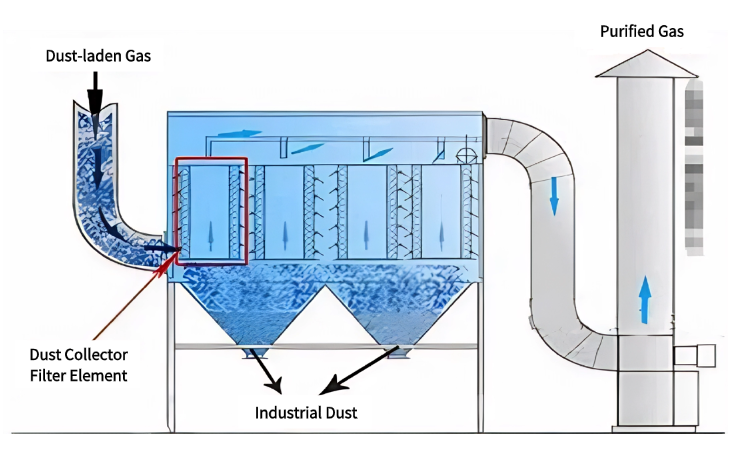
The dry dust collection system is so named because the industrial dust collector requires no water as a medium to achieve dust removal throughout the entire treatment process. The working principle of industrial dust collector is as follows: the collected dust-laden gas is delivered into the filtering chamber, where solid particles are separated through physical filtration methods such as gravity sedimentation, inertial separation and cyclone separation. The remaining gas then flows into filter bags. Fine suspended dust particles adhere to the woven micropores on the fibers of the filter bags and are retained on the bag surface, while the cleaned gas penetrates the filter bags, passes through the chimney and is finally discharged into the atmosphere. The fine particles accumulated on the filter bag surface fall into the dust hopper under external force, thereby completing the dust removal process of the dust collector.
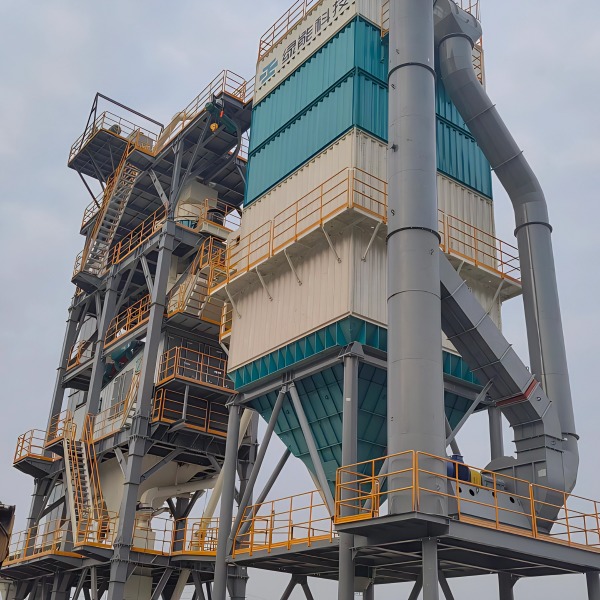
Precautions for Dry Dust Collector
An analysis of the working principle of the dry dust collection system indicates that industrial dust collector entails potential safety risks, especially when industrial dust collector handling combustible dust such as aluminum and magnesium powder. Frequent collision and friction occur within the entire dust collector filtration system, making static electricity generation inevitable. Once the concentration of combustible dust reaches the explosive limit, major potential safety hazards will arise. Therefore, from the perspective of work safety, when a dry dust collection system is adopted for combustible dust, targeted prevention and control measures must be formulated in accordance with the explosive characteristics of combustible dust.
Specific control measures are clearly stipulated in Clause 4.2 of AQ 4273-2016 Safety Technical Specification for dust removal systems in Dust Explosion Hazardous Areas. The core control strategies are summarized as follows:
1. Conduct inertization treatment on combustible dust to prevent its concentration from reaching the explosive limit;
2. Implement explosion isolation by installing hardware facilities such as explosion isolation valves to block explosion propagation;
3. Adopt explosion venting and explosion suppression technologies. In the event of an unavoidable explosion, the shock waves and energy generated by the explosion are released along preset directions and channels, so as to avoid damage to key equipment and facilities.
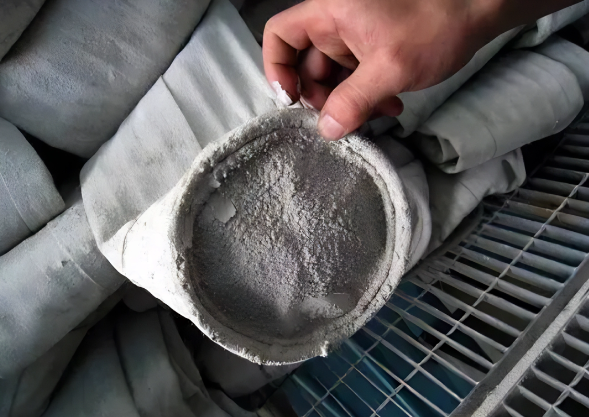
In fact, dry dust collection systems are inherently unsuitable for the treatment of combustible dust. Its inherent physical filtration mechanism inevitably generates massive static electricity. In addition, filter cloths and filter bags, commonly adopted key components of industrial dust collector, are generally woven from non-metallic fibers with poor electrical conductivity, resulting in extremely weak static elimination capacity and severe static accumulation. Furthermore, the filter bags and dust hoppers at the terminal section of the dry dust collection system are the primary areas prone to dust accumulation. Minor external disturbances can cause re-entrainment of deposited dust, forming suspended combustible dust clouds that pose a high explosion risk.
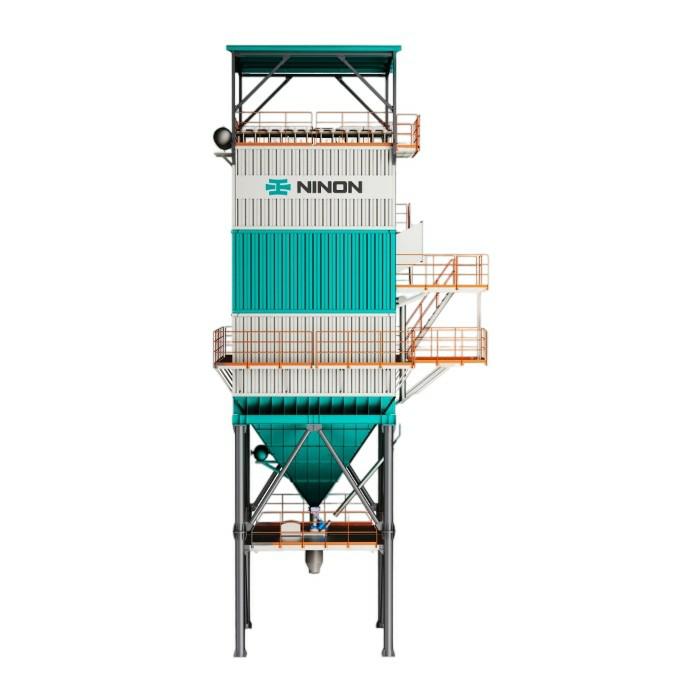
Ninon Industrial Dust Collector