

Modern Engineering Stabilization Materials
Advancements in engineering have optimized modern soil solidification techniques. New chemical and biological additives strengthen recycled asphalt and aggregate materials. Enzymatic treatment decomposes soil substances and binds particles with adhesives for solidification. Synthetic polymers also enhance cohesion of stabilized soil, forming stable foundations for construction projects.
Chemical Soil Stabilization
Chemical solidification modifies soil physical properties by adding chemical agents. Chemical reactions reduce soil plasticity, increase internal friction, form cementitious compounds, and greatly improve bearing capacity of stabilized soil. Common chemical additives for solidification are listed below.
1. Lime
Lime (quicklime, hydrated lime, LKD) delivers solidification for clay-rich soils (clay content ≥20%). It dries wet soil rapidly via exothermic reactions and replaces soil ions to cut plasticity and shrinkage. Through pozzolanic reactions within 2–24 hours of curing, lime generates CSH and CAH hydrates to cement particles of stabilized soil. It also raises soil pH, improves ion exchange capacity, and fosters long-term solidification of wet soil.
2. Cement
Cement supports solidification of most soil types, especially loam and sandy soil. It features fast solidification speed and endows stabilized soil with outstanding compressive strength for engineering bases.
3. Fly Ash
Fly ash is a low-cost, eco-friendly coal combustion byproduct. Blended with lime or cement at twice cement’s dosage, it boosts solidification of sandy and silty soil, and activators further elevate impermeability of stabilized soil. Class C fly ash has high CaO content and self-cementing solidification traits, while Class F fly ash needs alkaline activators to complete solidification.
Limitations: It requires low moisture in wet soil and pre-drainage measures. Freeze-cured mixtures lose strength when immersed in water, and sulfur compounds generate expansive minerals that undermine the long-term solidification effect of stabilized soil.
4. Asphalt
Asphalt is primarily adopted to advance waterproofing and impermeability for solidification of sandy wet soil.
5. Biochemical Polymers
Bio-enzymes break down organic matter in wet soil. Matched with polymers, they bind soil particles to strengthen cohesion and moisture resistance, facilitating steady solidification of stabilized soil.
Other Stabilizing Agents
1. Blast Furnace Slag
As an iron-smelting byproduct, slag has cement-like composition with latent hydraulicity activated by lime or alkalis to drive soil solidification. It is sorted into air-cooled crystalline slag, quenched glassy slag, and steam-expanded slag to meet diverse solidification demands of stabilized soil in engineering scenarios.
2. Innovative Stabilization Materials
◆ Enzyme stabilizers: Biodegradable additives that strengthen particle bonding to promote solidification of stabilized soil, extensively applied to low-traffic rural roads.
◆ Polymer emulsions: Lift tensile strength and lower permeability to reinforce solidification of sandy and silty stabilized soil.
◆Nanomaterials: Refine particle bonding and rigidity at microscale to upgrade the solidification performance of stabilized soil.
◆ Geopolymers: Waste-derived cementitious materials that achieve equivalent solidification effects as conventional cement with a smaller carbon footprint.
Solidification additives are selected according to project parameters. Composite additive systems have become the mainstream choice to maximize the solidification performance of stabilized soil.
3. Alkaline Soil Neutralization Treatment
Alkaline construction soil and sludge must undergo neutralization to support subsequent solidification of stabilized soil and protect the surrounding environment. The workflow covers sieving raw wet soil, blending neutralizers, compliant discharge, and reusing processed material for planting substrate after qualified solidification.
Ninon Wet Soil Remediation Equipment for Soil Solidification
Ninon waste sludge solidification equipment is designed for upgrading diverse soft soil and muck via targeted solidification. This waste sludge solidification equipment achieves precise feeding of composite additives and homogeneous material blending, which drastically improves mechanical strength and impermeability of stabilized soil.
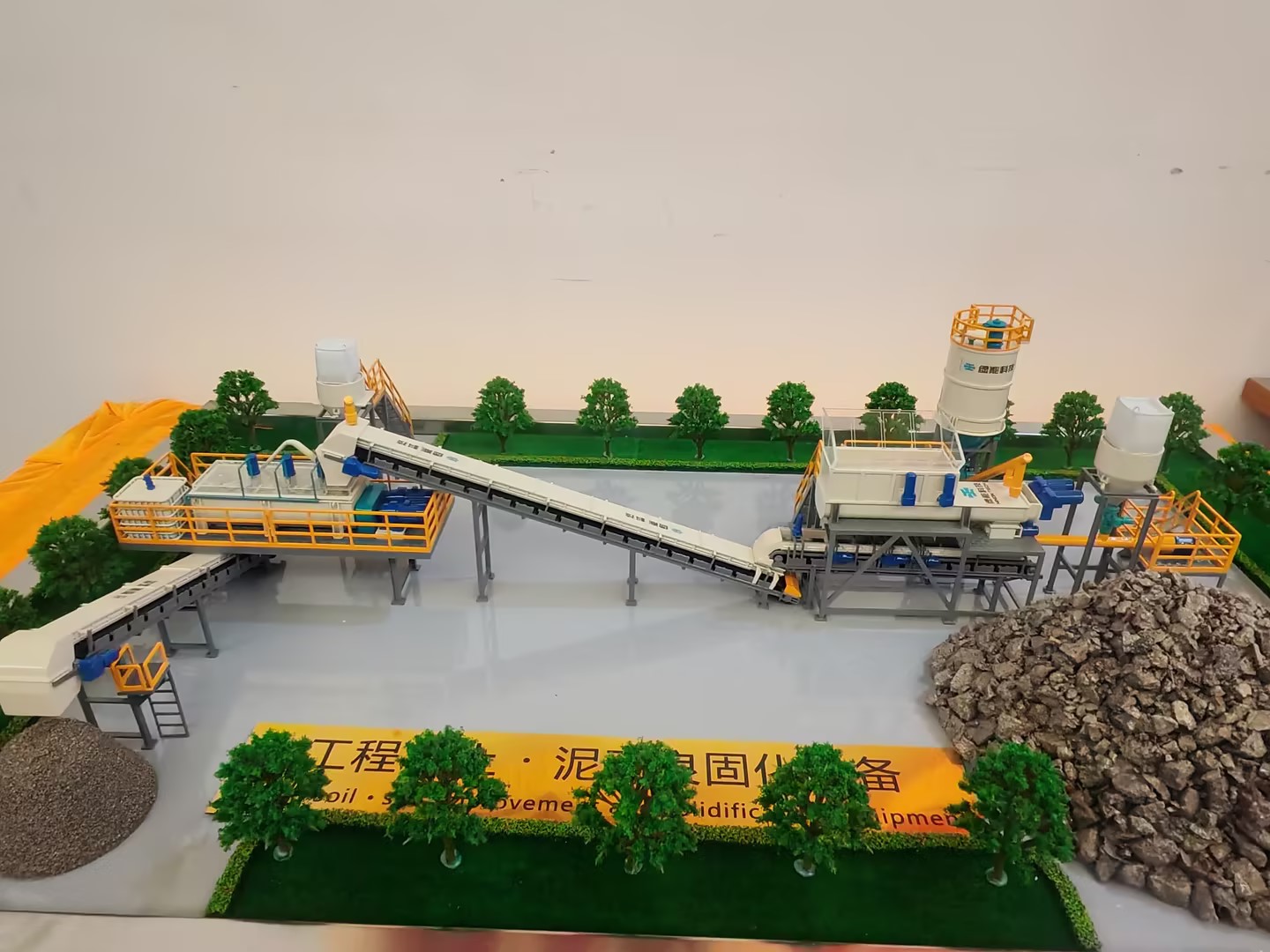
Ninon waste sludge solidification equipment model
With high automation and agile maneuverability, this waste sludge solidification equipment adapts to subgrade building and site remediation works. The solidification stabilized soil remediation equipment shortens construction periods, curtails energy use and complies with environmental norms, realizing on-site solidification and resource reclamation of stabilized soil, thus delivering remarkable cost reduction and productivity growth for geotechnical solidification projects.