

Aggregate is a crucial component in the construction industry, and its quality directly impacts the performance and durability of buildings. Aggregate gradation refers to the distribution of particle sizes within the aggregate. The particle size, shape, and their arrangement all influence the properties of building materials. By gaining an in-depth understanding of different types of aggregate gradation, project participants can select the most suitable materials for engineering projects, thereby ensuring the robustness and durability of structures.
Types of Aggregate Gradation
1. Dense-Graded Aggregate
Dense-graded aggregate consists of a continuous range of particle sizes without excessively large or small particles. Designed for dense packing, it features minimal voids between particles, offering high strength and low permeability.
2. Open-Graded Aggregate
Open-graded aggregate is a mixture of large particles with a small proportion of fine particles. It contains numerous voids between particles, facilitating rapid drainage and reducing the risk of surface or structural damage caused by water.
3. Uniform-Graded Aggregate
Uniform-graded aggregate comprises particles of similar or approximately the same size. This gradation is achieved by carefully selecting aggregates of different particle sizes to form a balanced mixture. The presence of voids between particles limits compaction degree. Typically used for decorative purposes or in producing high-strength, high-workability concrete mixtures.
4. Gap-Graded Aggregate
Gap-graded aggregate (characterized by uneven gradation) contains a significant number of particles either much larger or smaller than the average particle size of the aggregate. Lacking medium-sized particles, such aggregates may not compact uniformly. Commonly applied in concrete for bridges, tunnels, and high-rise buildings, as well as in the production of decorative concrete finishes.
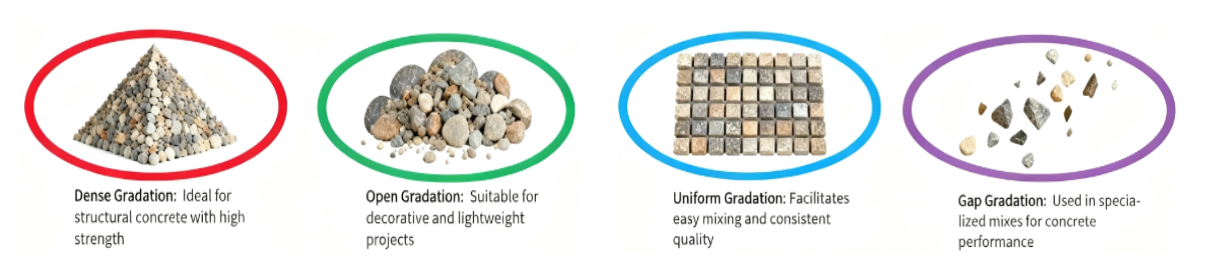
Essential Aggregate Selection Guide
(1) Aggregate Size and Gradation
(2) Material Strength and Durability
(3) Workability and Operability
(4) Compatibility with Other Materials
(5) Compliance with Industry Standards
Aggregate Gradation Equipment: Professionally Adapted to Multi-Scenario Aggregates
◆ LN-ZDS Series Manufactured Sand Production Line
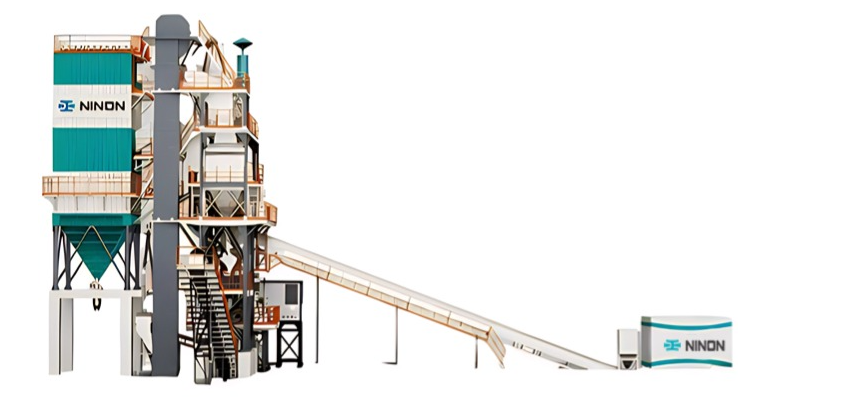
For high-quality graded aggregates, Ninon's LN-ZDS Series Manufactured Sand Production Line and VSI crusher are unbeatable. The LN-ZDS Series Manufactured Sand Production Line equipped with VSI crusher integrates crushing, shaping and screening, making this LN-ZDS Series Manufactured Sand Production Line a master of precise particle control. It delivers continuously graded sand with uniform shape and adjustable fineness modulus, fitting limestone, granite and construction waste.
◆ Aggregate Processing Equipment (VSI Crusher)
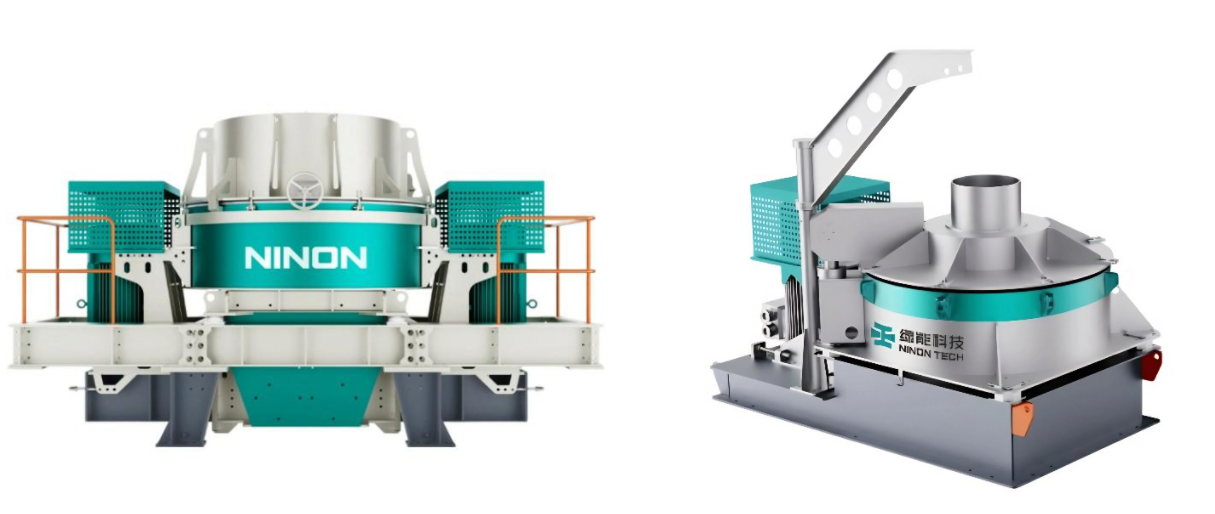
Ninon's VSI crusher, using "stone-on-stone" technology, with it's strong adaptability, VSI crusher is uitable for processing limestone, granite, river pebbles and other raw materials. This VSI crusher shapes raw aggregates into cubical particles, reducing harmful needle-like ones. The VSI crusher transforms raw aggregates into high-quality cubical particles. VSI crusher reduces needle-like and flaky particles that harm aggregate gradation, ensuring excellent material performance. The VSI crusher flexibly adjusts particle distribution to meet custom gradation needs, ensuring stability. Together, the LN-ZDS Series Manufactured Sand Production Line and VSI crusher boost concrete performance, cut costs, and guarantee top-tier graded aggregates.