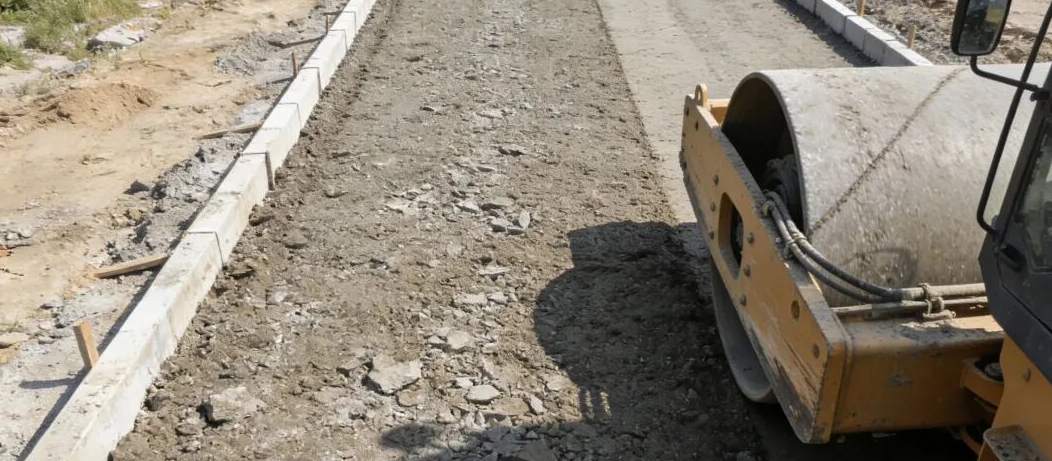

With the objectives of reduction, recycling, and harmless treatment, the Construction Muck Resource Utilization Project converts construction muck, engineering spoil, and demolition waste into qualified building materials such as recycled aggregate, recycled subgrade materials, recycled concrete, and eco-friendly bricks through professional treatment processes and dedicated aggregate processing equipment. This realizes the circular utilization of solid waste, effectively alleviates the pressure of urban muck disposal, and delivers ecological, economic, and social benefits.
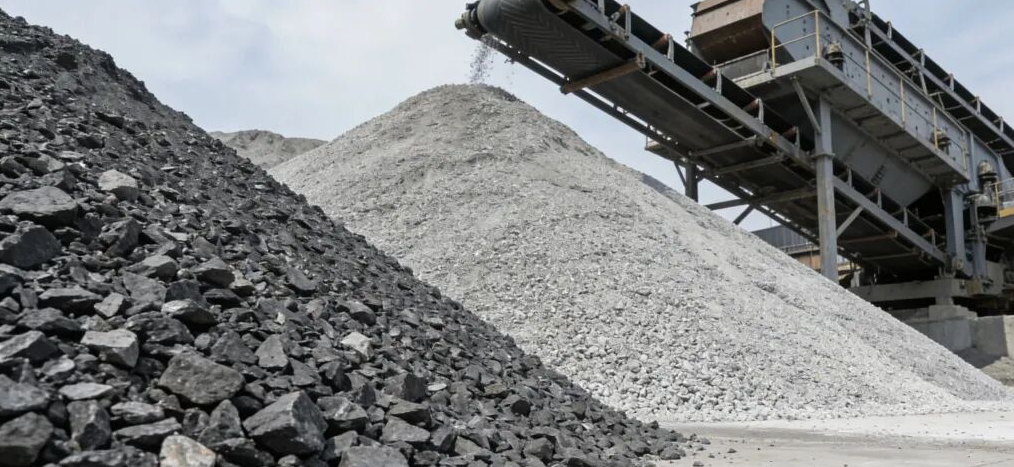
Core Technical Routes
1. Pretreatment Technology
Incoming muck is subject to unified reception, inspection and temporary storage. Mechanical sorting combined with manual sorting is adopted to remove plastics, wood, metals, impurities and other foreign matters, ensuring raw material purity for subsequent aggregate processing. Specialized crushing and screening equipment is then utilized to crush and grade the muck into basic raw materials of various particle sizes, laying a solid foundation for follow-up aggregate processing equipment operations.
2. Recycled Aggregate Production Technology
The pretreated materials pass through dedicated aggregate processing equipment for particle shaping and strength enhancement, producing high-quality recycled coarse aggregate and recycled fine aggregate. These qualified aggregates can fully replace natural sand and stone for applications in roads, concrete, brick manufacturing and other engineering fields. The aggregate quality complies with relevant national standards, and its strength, gradation and mud content meet strict production and application requirements, all guaranteed by standardized operation of crushing and screening equipment.
3. Core Solidification Technology
Class A soil stabilizer or Class B composite solidification core technology is adopted to stabilize and solidify fine-grained muck and silty soil, improving the material strength, water stability, compressive resistance and frost resistance to meet the requirements for road base, subbase and cement-stabilized layers. The solidification process is controllable without secondary pollution, and the treated materials feature stable performance and high durability, compatible with downstream crushing and screening equipment and aggregate processing equipment.
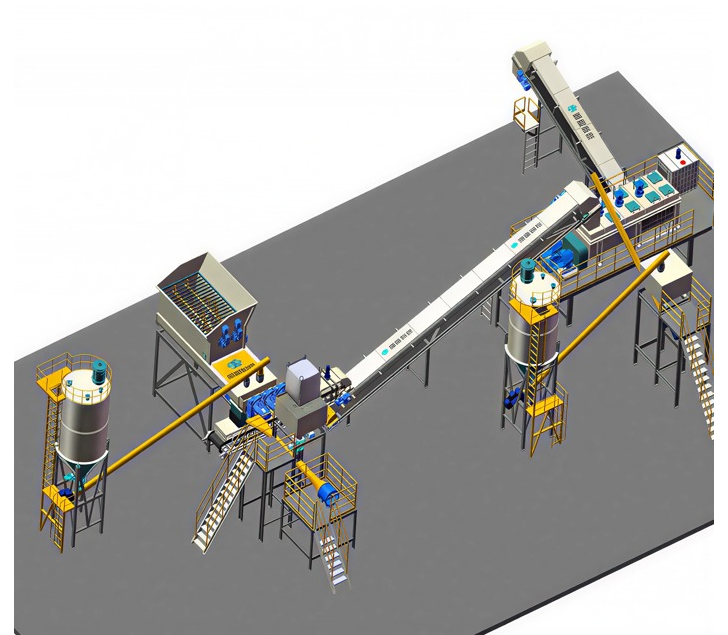
Wet Clay Waste Soil Solidification Equipment
4. Batching and Mixing System
A fully automatic intelligent batching and mixing plant is adopted, consisting of aggregate bins connected to aggregate processing equipment, powder bins, metering systems, conveying systems linked with crushing and screening equipment, and a twin-shaft compulsory mixer.
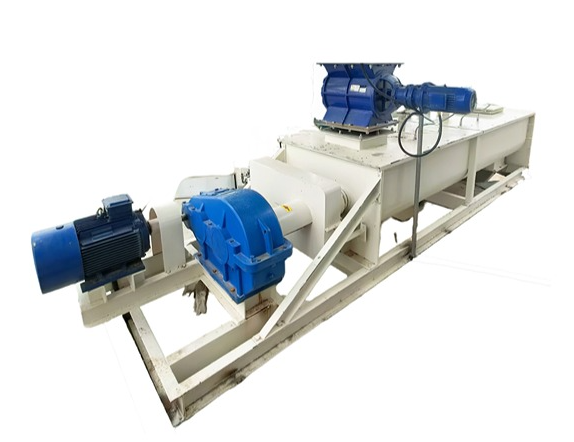
Continuous Silt and Muck Mixing Equipment
The system automatically accomplishes high-precision metering, proportioning and mixing of recycled aggregate, stabilizer, cement, water, admixtures and other materials in accordance with the formula. The whole process is under PLC intelligent control to ensure accurate mix proportion and uniform, stable mixture, coordinating efficiently with front-end crushing and screening equipment.
5. Environmental Protection and Dust Removal System
Closed gas collection hoods and pulse bag dust collectors are installed at all dust-generating points across crushing and screening equipment, aggregate processing equipment, conveying, batching and mixing links. Supporting facilities such as spray dust suppression, vehicle wheel washing and plant-wide atomization systems are equipped to realize “full collection, full treatment and zero emission” of dust.
Dust removal efficiency is ≥99%, meeting environmental emission standards. Meanwhile, the collected dust can be recycled into production via aggregate processing equipment, achieving zero resource waste and circular production.
6. Finished Products and Delivery
Finished Product Curing and Storage: Recycled mixture, recycled bricks, recycled aggregate and other finished products processed by professional crushing and screening equipment and aggregate processing equipment are stored by category and cured in a standardized manner to ensure qualified strength and stable product performance.