

What is Soil Conditioner ?
Soil conditioners are additives that alter soil’s chemical or physical properties to boost its functionality, such as hardening soil, adjusting pH, preventing erosion, and supplying nutrients. Choosing the right type is critical—wrong selections may damage soil or ecosystems, e.g., lime disrupting sensitive environments or hardeners inhibiting plant root growth.
Types of Soil Conditioners
Soil conditioners fall into two main categories: organic and inorganic. Organic ones derive from living organisms and by-products, featuring excellent environmental friendliness but often insufficient strength and fast decomposition. Inorganic varieties come from minerals or chemicals, offering higher effectiveness and durability, ideal for long-term engineering projects. However, improper use of processed inorganic materials may disrupt soil balance, and some can generate harmful dust.
How to Select the Right Soil Conditioner
A four-step process should be followed for selecting soil conditioners:
1. Determine the soil type—different soil types require matching conditioners.
2. Clarify the project objectives—for example, nutrient adjustment is needed for farming, while soil reinforcement is required for erosion control.
3. Evaluate alternative products—screen options based on composition, cost, maintenance, and environmental impact.
4. Decide on a single or combined application of conditioners to achieve complementary advantages.
Applications of Soil Conditioners
Soil conditioners boast a wide range of applications, covering horticulture and agriculture, construction engineering, dust control, and ecological restoration.
1. In agriculture, they can improve soil structure, aeration and pH value, retain water and supplement fertilizers, facilitating the robust growth and high yield of plants.
2. In construction, soil stabilizers can reinforce soil and enhance its bearing capacity, ensuring the stability and durability of engineering structures. Some products can play a dual role in dust suppression and soil consolidation, and special dust suppressants fix soil particles by forming a surface crust.
3. In terms of ecological restoration, soil conditioners can remove toxic substances and clean up pollution in soil, supporting the environmental restoration and redevelopment of mining areas and former industrial land.
Used in Wet Soil Remediation Equipment for Recycled Soil
In infrastructure and mine restoration, wet soil disposal plagues project efficiency and compliance. Ninon's wet soil remediation equipment, paired with a high-performance continuous mixer, revolutionizes this scenario by integrating soil conditioners scientifically.
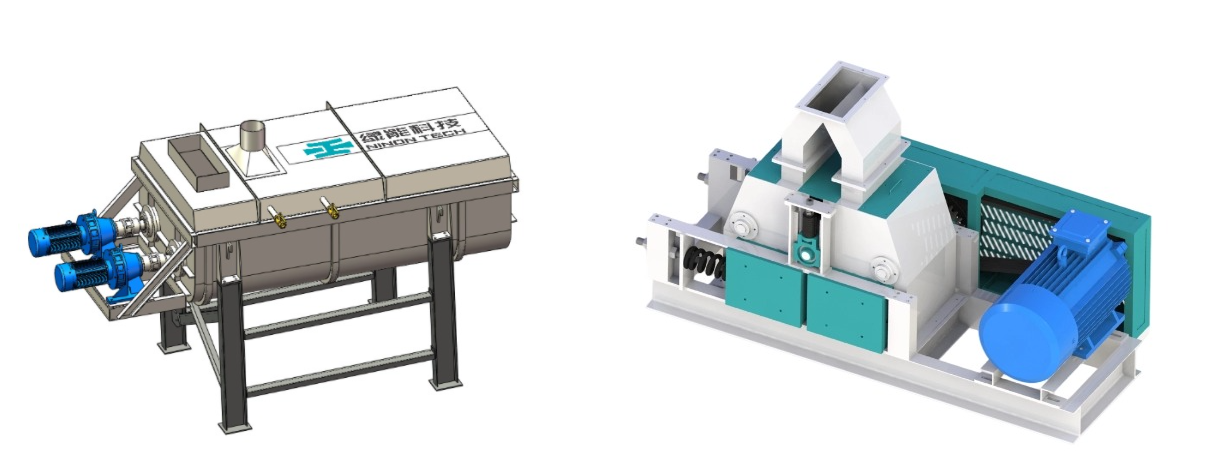
Muck and Silt Continuous Mixer / Screw Twin-Roll Crusher
This continuous mixer adjusts blending parameters to match conditioners with clay, silt or loam. The wet soil remediation equipment enhances soil strength via targeted conditioner mixing to meet projects like subgrade reinforcement; for ecological restoration.
The intelligent system of the wet soil remediation equipment and continuous mixer can monitor the added parameters of soil conditioners to adjust the required solidified soil accordingly. This continuous mixer ensures a mixing uniformity of over 95%, achieving homogeneous blending of materials. The continuous mixer enhances the bearing capacity and impermeability of the solidified soil, and delivers high-efficiency output.
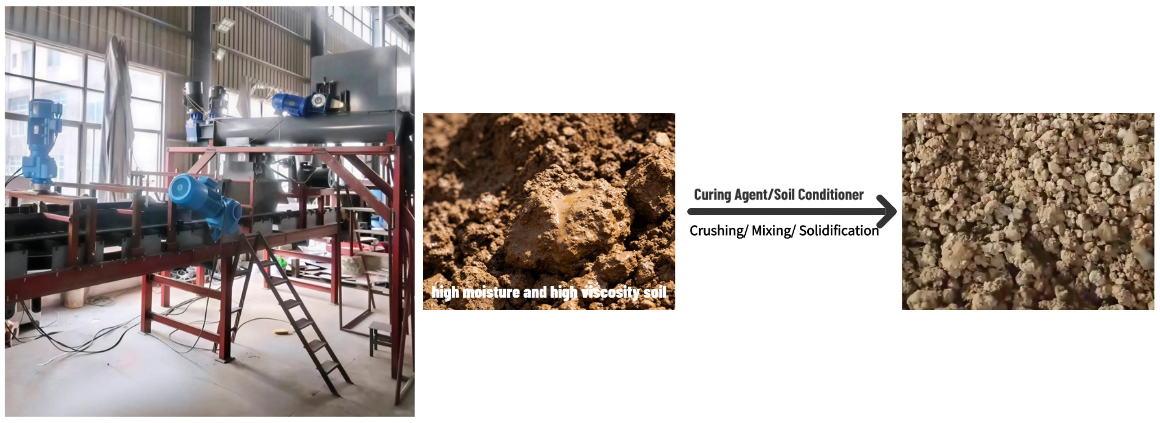
Wet Soil Remediation Equipment
This wet soil remediation equipment with continuous mixer cuts transportation costs, avoids secondary pollution, and accelerates compliance. It's your ideal choice for efficient, economical wet soil disposal.