

The Pros and Cons of 11 Soil Stabilization Methods
| Stabilization method | Pros | Cons |
| Lime:a soil stabilizer processed from limestone, which effectively reduces the swell-shrink potential of expansive soils such as clay. It is commonly used for base course stabilization in road construction to prevent soil displacement and cracking, thereby protecting the pavement structure. | 1. Rapidly dries and stabilizes soil, reducing construction delays. 2. Possesses certain contaminant adsorption capabilities, suitable for environmental remediation. | 1. Alters soil pH, potentially disrupting microbial activity and nutrient balance. 2. The construction process is complex, requiring rigorous testing and strict dosage control. 3. Improper dosage or substandard quality compromises stabilization effectiveness. 4. Higher cost (especially for non-hardened sites).5. Irritating to humans; prolonged exposure poses health risks. |
| Cement:Soil, water, and cement are mixed in proportion to bond soil particles into an integral mass, thereby significantly improving the strength of the base course. | 1. High structural strength and excellent load-bearing capacity. 2. Certain types of cement exhibit waterproofing, chemical resistance, and weather resistance properties. | 1.High brittleness, prone to shrinkage cracking. 2. High construction requirements (influenced by temperature, moisture content, and mixing). 3.Relatively high cost, making it uneconomical for non-hardened sites. |
| Polymer:It acts like glue, bonding soil particles together to enhance the bearing capacity and tensile strength of the foundation. | 1. Suitable for most coarse-grained soils, improving their engineering properties. 2. The service life of some construction polymers can reach several decades. | 1. Limited effectiveness on fine-grained soils (e.g., clay). 2. Poor durability in wet and soft environments, prone to degradation. 3. Synthetic polymers may pose potential environmental impacts. |
| Chloride:By lubricating soil aggregates and particles, they can move more freely and bond more tightly together during compaction, thereby stabilizing the soil. | 1. Significant dust suppression effectiveness, improving visibility and traffic safety while reducing dust pollution. | 1.Poor durability and susceptibility to erosion require annual reapplication. 2.Potential to contaminate soil and water, harm plants, and corrode metals. 3.Long-term use may lead to a reduction in soil bearing capacity. |
| Mechanical (compaction):Compaction involves applying pressure to tightly bond soil particles together, thereby increasing its density and bearing capacity. | 1.Suitable for most soil types. 2.No curing time required; does not involve harmful chemicals. | 1.Effect is difficult to maintain long-term and often needs to be combined with other methods. 2.Quality is highly dependent on the technical skills of personnel. 3.Water content must be strictly controlled. 4.Heavy equipment may generate vibration and noise. |
| Mechanical (excavation and replacement): Suitable for situations where the surface soil is unstable. During construction, the weak soil layer is first excavated until a firm base (such as a stabilized soil layer or rock stratum) is reached. The inferior soil is then removed from the site, replaced with qualified fill material, and compacted in layers to the design elevation. | Thoroughly remove the poor soil layer to fundamentally prevent damage to the foundation. | 1.High labor and transportation costs. 2.If backfill materials or compaction are inadequate, it can easily lead to project failure. |
| Enzyme preparation: It chemically reacts with soil particles to bond them firmly, forming a hard, dense, and concrete-like integral structure. After treatment, soil strength can increase by more than tenfold, with excellent water resistance and erosion resistance. | 1.High cost-effectiveness (construction costs can be reduced by 80%). 2.Durable and long-lasting (service life of unpaved roads: 7-15 years). 3.Safe and environmentally friendly, composed of organic ingredients, harmless to the environment and organisms. | 1.High initial investment cost. 2.Strict construction requirements; full compaction is necessary. 3.Significant variation in soil adaptability. 4.Limited scope of application (not recommended for building foundations). |
| Aggregate:Refers to rock materials that have been processed and manufactured to specific size specifications, with different types available for selection based on engineering requirements. | 1.High strength, good durability, and no chemical hazards. 2.Wide range of material sources, with transparent information on technology and costs. | 1.High transportation costs. 2.Improper particle size can affect effectiveness (e.g., excessive fineness can cause slippage). 3.Prone to dust generation and loss, requiring regular replenishment or replacement. |
| Pavement stabilization:Paving roads with asphalt, concrete, or crushed stone effectively stabilizes the soil and significantly reduces common maintenance issues on unpaved roads, such as rutting and mud formation. | 1.Paved roads offer reliable performance and can withstand loads over the long term. 2.Asphalt emulsion has a relatively low cost. | 1.Full-line paving is costly. 2.Heavy vehicles are prone to damaging the pavement, resulting in a significant maintenance burden. 3.Asphalt emulsion may have negative environmental impacts. |
| Geosynthetics:A category of polymer products used for soil stabilization and reinforcement, common types include geotextiles (fabrics), geomembranes (plastic sheets), geogrids (plastic grids), and geocells (honeycomb structures). | 1.Most products are easy to install (under proper construction). 2.A wide variety of types are available to adapt to different engineering requirements. | 1.Thin materials are prone to tearing and difficult to repair. 2.Some materials may become clogged, affecting drainage. 3.Products with complex structures typically have higher costs. |
| Fly ash:A by-product of coal-fired power plants, acting similarly to cement or lime by stabilizing and strengthening soil through bonding. This dry powder has good hygroscopicity, making it particularly suitable for treating soil with excessive moisture. | 1.Cost is typically lower than that of lime or cement. 2.As a resource utilization of industrial by-products, it reduces waste. | 1.Supply is limited in non-coal regions. 2.With the reduction of coal-fired power plants, future supply may be constrained. |
| Plants:(Including grasses, trees, shrubs, etc.) Plants can stabilize soil through their root systems, effectively reducing soil erosion, particularly on slopes and in humid areas, as their roots absorb excess water and enhance soil integrity. | 1.Fully environmentally friendly, improving the ecological environment. 2.Provides habitats, purifies air and water bodies. 3.Low cost with a natural and aesthetically pleasing landscape effect. | 1.Limited scope of application (not suitable for high-intensity use areas such as vehicle road surfaces). 2.Stabilization strength is lower than that of artificial engineering materials. 3.Plant species must be carefully selected to avoid introducing invasive species. |
Machinery for Stabilization
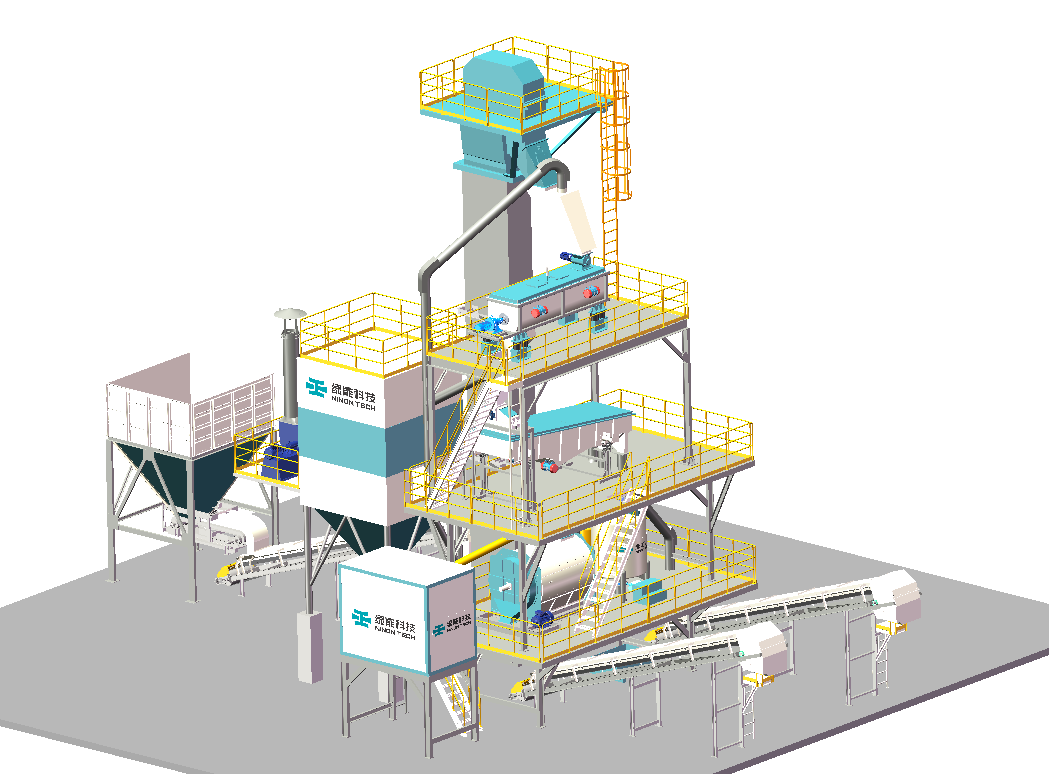
Recycled Aggregate Surface Strengthening and Carbonation Equipment
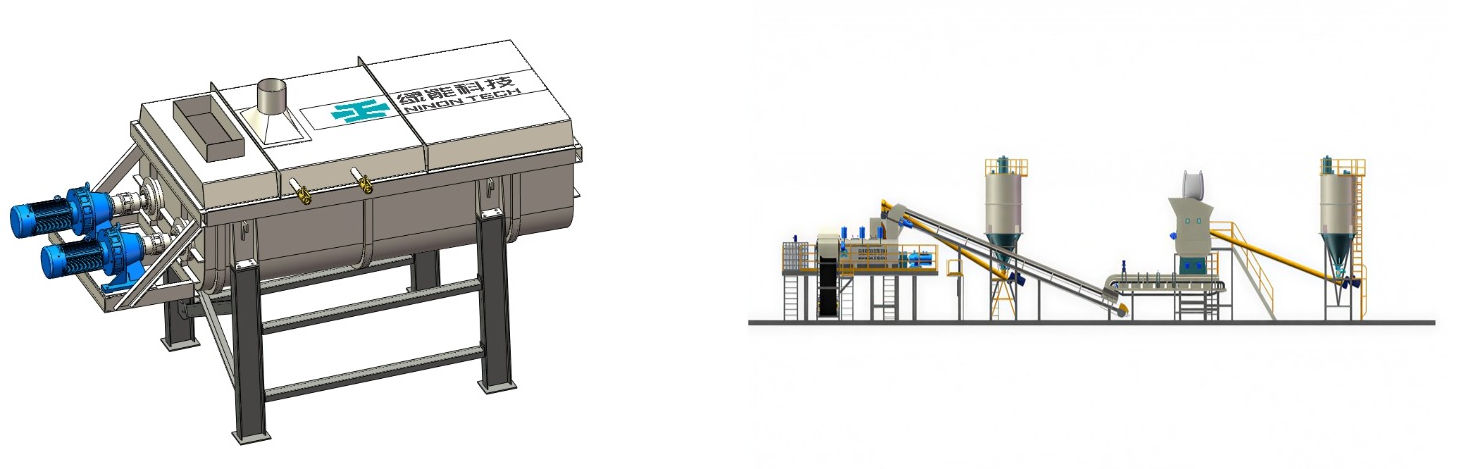
Continuous Muck Mixing Equipment / Waste Sludge Solidification Equipment