

Selecting the appropriate vibrating screen is crucial for ensuring efficient and stable material screening operations. The type selection of a vibratory screen mainly depends on material characteristics, production requirements, and long-term cost factors. This process provides a systematic guide for choosing between a linear vibrating screen and a circular vibratory screen, helping to optimize screening efficiency and reduce operational costs.
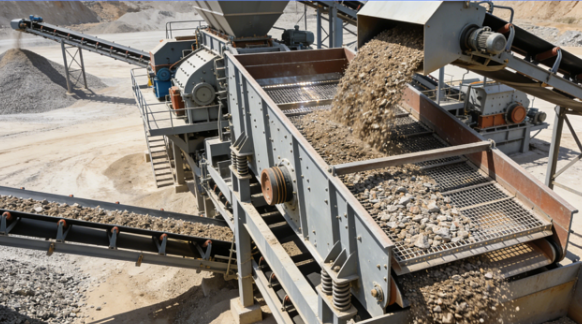
Determine Material Characteristics
The physical properties of the material are the primary basis for selecting a vibrating screen. Key indicators include particle size range and moisture content, which directly affect the screening effect and the applicability of different types of vibratory screens.
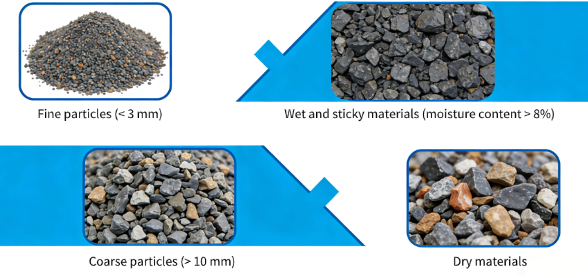
● Particle Size Range
For fine particles (particle size <3mm), a circular vibratory screen is preferred. This type of vibrating screen is equipped with a multi-layer structure, which can achieve efficient multi-layer classification of fine materials, ensuring accurate screening results. For coarse particles (particle size >10mm), a linear vibrating screen is more suitable. Its unique structural design enables large processing capacity, which can quickly screen coarse materials and meet the demand for high-throughput operations.
● Moisture Content
For wet & sticky materials with moisture content >8%, a linear vibrating screen is recommended. To avoid screen clogging caused by wet materials, the linear vibrating screen can be equipped with bouncing balls for screen cleaning, ensuring continuous and stable operation. For dry materials, a circular vibratory screen is more appropriate. Its high inclination angle design can effectively prevent material clogging, improve screening efficiency, and adapt to the characteristics of dry material screening.
Match Production Requirements
Production requirements, including processing capacity and screening accuracy, are important factors to further determine the type of vibrating screen. Selecting a vibratory screen that matches the production demand can maximize operational efficiency and ensure product quality.
● Processing Capacity
When the required processing capacity is less than 500 t/h, a linear vibrating screen is the optimal choice. It has the advantage of low energy consumption, which can reduce operational costs while meeting the processing demand. When the processing capacity is ≥500 t/h, a circular vibratory screen is more suitable. It has stable efficiency even under high-throughput conditions, avoiding the problem of reduced screening effect caused by excessive load.
● Screening Accuracy
If the screening accuracy requires an error of ±0.5 mm, a linear vibrating screen should be selected. The linear vibrating screen has a small screen inclination angle, which prolongs the material retention time on the screen surface, allowing sufficient screening and ensuring high accuracy. If the allowable screening error is ±1 mm, a circular vibratory screen can meet the demand. It has the characteristics of fast screening speed and stable performance, which can balance efficiency and accuracy.
Evaluate Long-term Costs
In addition to material characteristics and production requirements, long-term cost evaluation is also an important part of vibrating screen type selection. It includes initial investment and energy consumption ratio, which directly affect the long-term economic benefits of the project.
● Initial Investment
In terms of initial investment, the price of a circular vibratory screen is 10%–15% higher than that of a linear vibrating screen, mainly due to its complex structural design and higher manufacturing requirements. In contrast, the linear vibrating screen adopts a modular design, which not only reduces the initial investment cost but also lowers the subsequent maintenance cost, bringing more economic benefits in long-term operation.
● Energy Consumption Ratio
Energy consumption is an important part of long-term operational costs. The energy consumption ratio of a circular vibratory screen is 0.3–0.5 kW·h per ton of material processed, while the linear vibrating screen has a lower energy consumption ratio of 0.2–0.4 kW·h per ton of material processed. For projects with long-term continuous operation, selecting a linear vibrating screen can effectively reduce energy consumption costs and improve the overall economic efficiency of the project.
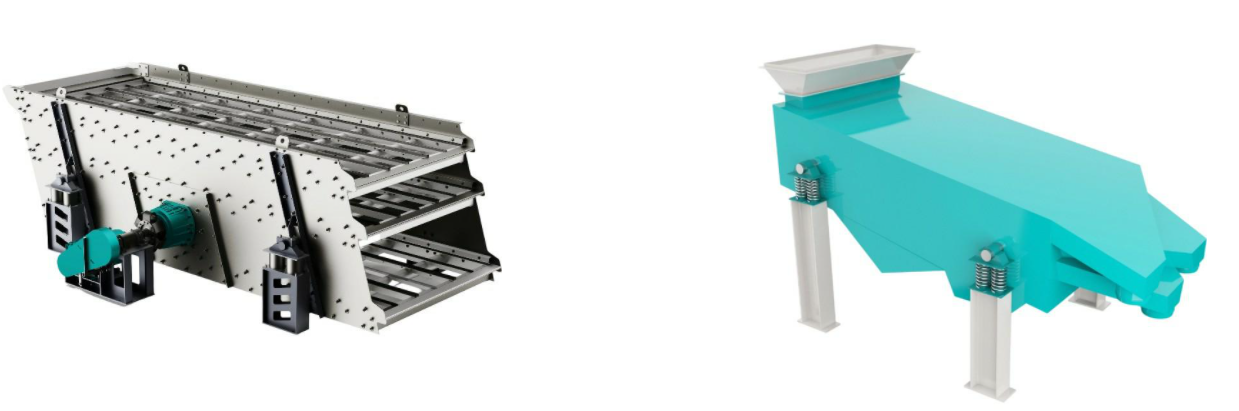
In summary, the type selection of a vibrating screen should comprehensively consider material characteristics, production requirements, and long-term costs. By following this decision process, the most suitable linear vibrating screen or circular vibratory screen can be selected, ensuring efficient, stable, and economical screening operations.