

Dry Mixed Mortar Plastering Construction Technology
Compared with traditional on-site mixed mortar, dry mixed mortar boasts superior quality, a wide variety of types, excellent workability, convenient application, environmental friendliness and economic benefits. Promoting environmentally compliant dry mixed mortar at construction sites has become an inevitable trend.
Technical Features
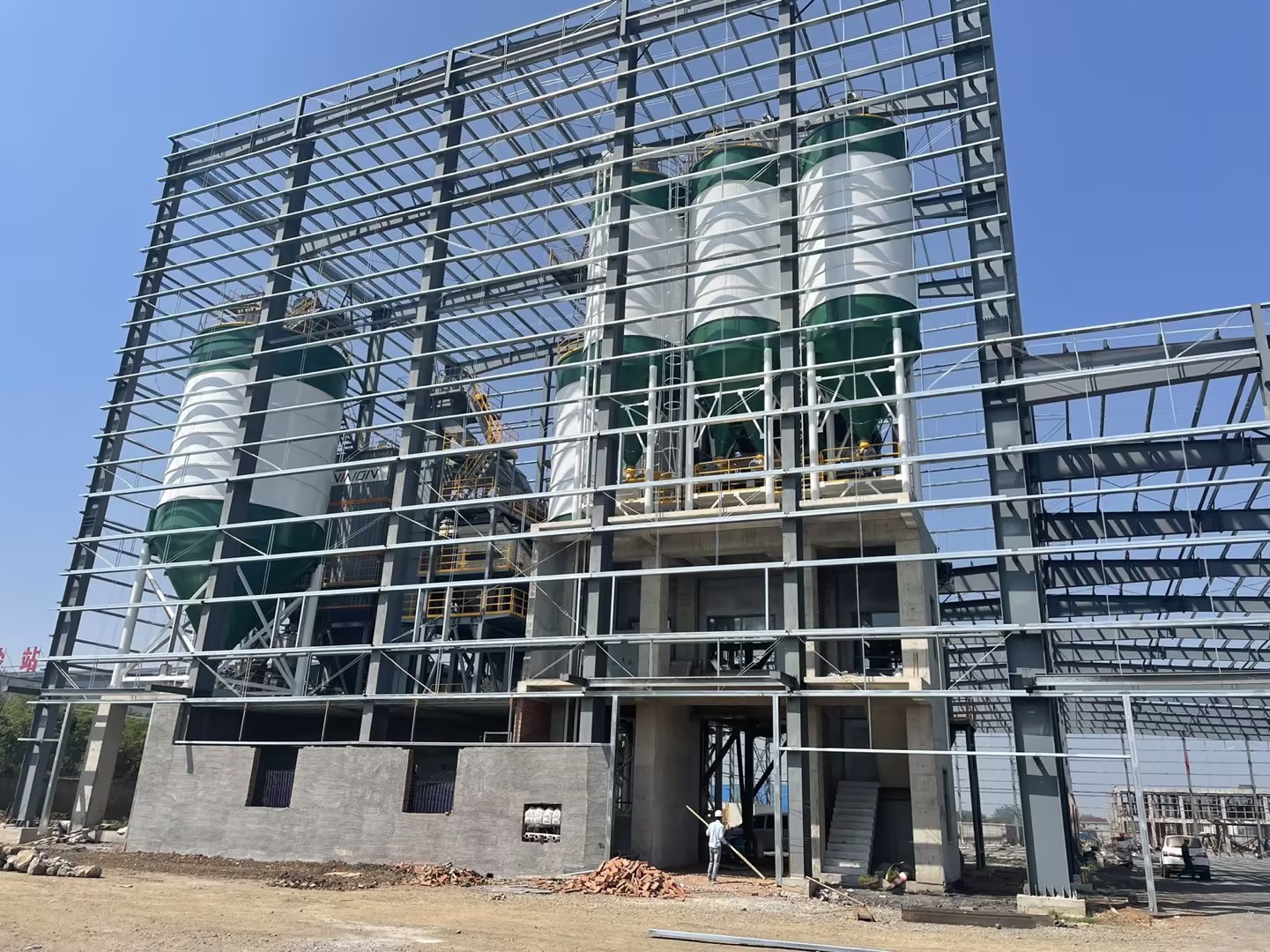
Dry mixed mortar is a mixture composed of cement, dried aggregates or powder, additives, and other components determined by performance requirements. It is proportioned, measured, and mixed in professional manufacturing plants, and mixed with water or supporting components at the application site in accordance with specified ratios. It is available in bagged and bulk forms according to packaging.
The use of dry mixed mortar, especially masonry mortar and finishing mortar, solves common quality problems frequently encountered in on-site mixed mortar, such as low strength, cracking, and uneven thickness. It also reduces noise and environmental pollution, playing a positive role in environmental protection and improving construction quality.
The main advantages and characteristics of dry mixed mortar are as follows:
◆ Guaranteed Production Quality
Dry mixed mortar is produced by professional manufacturers with fixed production sites, complete sets of equipment, precise metering, and a sound quality control system. For example, a sophisticated computer control system ensures accuracy and stability throughout the production process.
River sand drying controls the moisture content (generally required to be ≤ 0.5%); dust removal controls the mud content (generally required to be ≤ 0.5%); and screening controls the particle gradation (sand particle size is generally less than 2.5 mm, stored in separate intervals and proportioned reasonably according to product requirements during production).
Accurate computer-controlled metering ensures the precision of raw material weighing. Forced mechanical mixing guarantees uniform blending of all materials. Strict and standardized quality inspection ensures consistent product quality. These measures collectively provide full assurance of product quality.
◆ Superior Construction Performance and Quality
Dry mixed mortar is formulated with specifically designed mix ratios and modified with various additives according to product type and performance requirements. Common additives include cellulose ether, redispersible polymer powder, thixotropic lubricant, defoamer, air-entraining agent, accelerator, water repellent, etc.
The modified mortar features excellent workability and quality, with good workability facilitating masonry, plastering and pumping, thus improving construction efficiency: manual plastering reaches approximately 10 m²/h, while mechanical construction reaches 40 m²/h. The single-laying length during masonry is also greatly increased.
Due to its superior construction performance and quality, construction quality is improved, the thickness of construction layers is reduced, and materials are saved. Improved construction quality significantly reduces the need for repair and rework, while also lowering the long-term maintenance costs of buildings.
Complete Product Range to Meet Various Project Requirements
Dry mixed mortar manufacturers can develop formulas according to different base materials and functional requirements. Examples include:
High water-retention masonry and plastering mortars designed for porous wall materials such as aerated concrete blocks, sand-lime bricks, ceramsite concrete hollow blocks, and fly ash bricks;
Self-leveling floor mortars for high-flatness floor applications.
They can also meet various functional requirements such as thermal insulation, anti-seepage, grouting, repair, and decoration. According to incomplete statistics, there are more than 50 types of dry mixed mortar.
Scope of Application
In the construction industry, dry mixed mortar acts as a thin layer for bonding, cushioning, protection and decoration. It has a wide range of applications, mainly including:
● Ordinary masonry mortar
● Ordinary plastering mortar
● Ordinary floor mortar
● Thermal insulation board bonding mortar
● Thermal insulation board finishing mortar
● Building thermal insulation mortar
● Interface treatment mortar
● Wall finishing mortar
● Ceramic tile bonding mortar
● Ceramic tile grout
● Polymer cement waterproof mortar
● Self-leveling mortar for floors
● Non-shrink grouting mortar
● Special bonding and plastering mortar for aerated concrete
● Bonding gypsum mortar and finishing gypsum mortar