

For sand and gravel mining enterprises, dust pollution is one of the most critical environmental issues at present. Many companies have been ordered to rectify and improve by environmental inspections due to dust emissions. Industrial dust collector has become a must-have investment, regardless of cost concerns.
Today, we will share with you the dust sources in industrial and mining enterprises such as sand and gravel mines, the commonly used industrial dust extractor, their respective characteristics, and how to select the right equipment. This article aims to help industrial and mining enterprises choose more suitable dust removal solutions.
What Are the Dust Sources in Sand & Gravel Enterprises?
Particulate matter in industrial and mining enterprises is generally classified as productive dust, which mainly originates from the crushing and grinding system, material handling system, and secondary dust emission.
(1) Dust Generation from Crushing and Grinding Systems
The crushing and grinding system is a key dust source in industrial and mining operations, characterized by high dust intensity and fine particle size.
(2) Dust Generation from Material Handling Systems
Dust emission points in the handling system are mainly located at the feeding points, discharge points, and during transport of belt conveyors.
Dust formation at feeding and discharge points is caused by the air shear effect when materials fall due to height differences.
During transportation, the middle section of the belt vibrates vertically and swings horizontally, producing intermittent instantaneous pressure on the materials. Air in the material gaps, carrying dust, is squeezed out.
Dust is also easily generated by vibration when belt joints pass over idlers.
In addition, materials adhering to the belt may drop during the return journey, resulting in dust.
(3) Secondary Dust Emission
Secondary dust emission can occur when mineral dust settled on the ground by wet spraying is resuspended due to liquid evaporation, ventilation, or personnel movement.
It can also be caused by rapping cleaning of dust collectors or back-mixing in the ash hopper.
Commonly Used Industrial Dust Collectors and Their Performance Features
Commonly used dry industrial dust extractors in industrial and mining enterprises mainly include baghouse industrial dust collectors, dry electrostatic precipitators (ESPs), and cyclone industrial dust extractors.
Common wet industrial dust collectors mainly include spray scrubbers, impingement scrubbers, venturi wet scrubbers, etc.
(1) Baghouse Industrial Dust Collectors
The baghouse industrial dust collector is the most widely used type of dry dust removal equipment.
In this type of collector, dust-laden gas passes unidirectionally through filter cloth; dust particles are trapped on the inlet side of the filter media, allowing clean gas to flow out from the opposite side. Dust accumulated on the filter media is then removed by natural or mechanical cleaning methods.
Baghouse industrial dust collectors feature high dust removal efficiency, strong adaptability to different types of dust, flexible handling air volume, simple structure, and stable operation. For these reasons, they are often the preferred dust removal solution for industrial and mining enterprises.
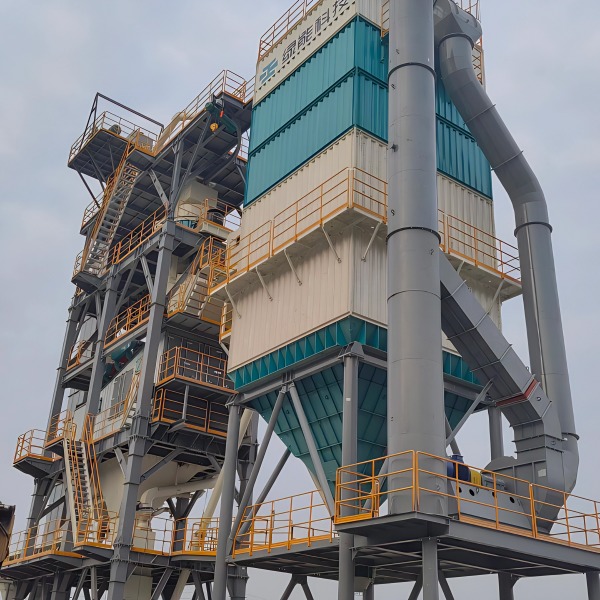
However, during operation, if the actual air volume exceeds the designed volume, filter resistance will increase. Similarly, filter bag damage caused by mechanical wear or improper operation can greatly reduce the filtration efficiency and service life of the baghouse industrial dust collector.
(2) Electrostatic Precipitators (ESPs)
Electrostatic precipitation uses a strong electric field generated by high voltage of tens of thousands to hundreds of thousands of volts to ionize the gas, thereby charging the dust particles. The charged dust is then captured and separated from the air stream.
Electrostatic precipitators are not widely used in industrial and mining enterprises, mainly due to their high initial investment cost and the requirement for experienced operators. Improper operation can easily lead to malfunctions and affect production.
(3) Cyclone Industrial Dust Extractors
A cyclone industrial dust extractor separates dust particles from gas by means of centrifugal force, achieved by introducing the dust-laden gas tangentially into the unit.
After entering the cyclone tangentially through the inlet, the dust-laden airflow rotates downward along the outer wall. Upon reaching the bottom of the cone, it reverses upward, spirals along the central axis, and exits through the exhaust pipe. Driven by centrifugal force, dust is thrown toward the outer wall and falls into the ash hopper along the wall under the combined action of the downward swirling airflow and gravity.
(4) Spray Industrial Dust Extractors
Spray dust suppression is the simplest and most economical method to control open-source dust.
Nozzles capable of producing a well-distributed mist for effective dust capture are the key component of spray technology.
(5) Impingement Industrial Dust Extractor
An impingement industrial dust extractor uses the kinetic energy of the gas stream itself to impact the liquid surface, generating water droplets and splashes for dust removal.
(6) Venturi Wet Industrial Dust Collector
The venturi wet industrial dust collector is a high-efficiency wet scrubber. It can be used for cooling high-temperature flue gas, as well as for purifying gas containing micron and submicron dust particles and toxic/harmful gases easily absorbed by the scrubbing liquid.