

Tow Categories of Crushing Equipment
One category is compression-type crushing equipment, such as jaw crushers, gyratory crushers, cone crushers, etc. It is suitable for crushing raw materials with high abrasion index, and produces low stone powder content. However, the crushed materials generally contain a large number of flaky and elongated particles, resulting in poor pumpability.
The other category is impact-type crushing equipment, such as impact crushers and vertical shaft impact crushers (VSI). They are characterized by large crushing ratio, simple structure, convenient maintenance, excellent product particle shape, and small loss of compressive strength of materials.
In large-scale sand and aggregate production lines, jaw crushers or gyratory crushers are usually used for primary crushing, while cone crushers, impact crushers or hammer crushers are adopted for secondary crushing.
The commonly used crushers in sand and aggregate production lines, together with their advantages, disadvantages and applicable scopes, are as follows:
Jaw Crusher
Advantages: Jaw crusher features simple structure, reliable operation, compact size, light weight, low installation height. And jaw crusher with large feed opening, adjustable discharge opening, and low cost.
Disadvantages: Jaw crusher may lead to poor product particle shape, high content of flaky and elongated particles. Jaw crusher has low output, and jaw cruhser requires forced feeding. There will has rapid wear of bushings in jaw crushers.
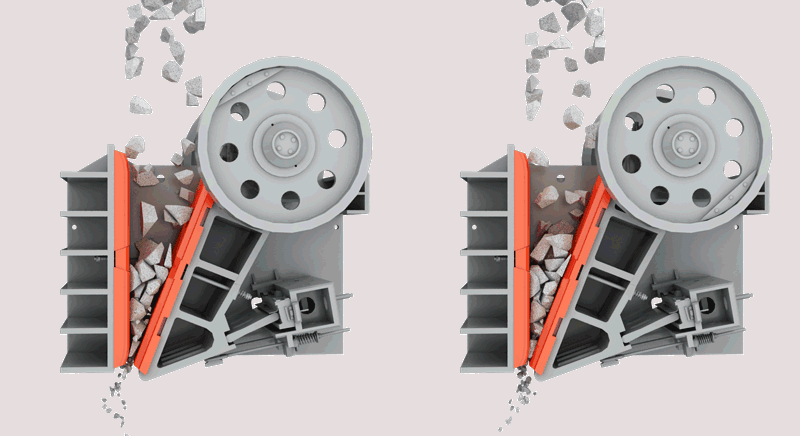
Jaw Crusher
Application Scope: Jaw crusher has good adaptability to various rock hardness. And jaw crusher is generally used for primary crushing of raw materials. When used for secondary crushing, jaw crusher needs to be miniaturized.
Gyratory Crusher
Advantages: Large single-machine processing capacity, low unit energy consumption, excellent product particle shape. Medium and large models allow continuous feeding without the need for a feeder.
Disadvantages: Complex structure, large dimensions, tall machine body, difficult maintenance, high cost, small feed opening, and large civil engineering workload.
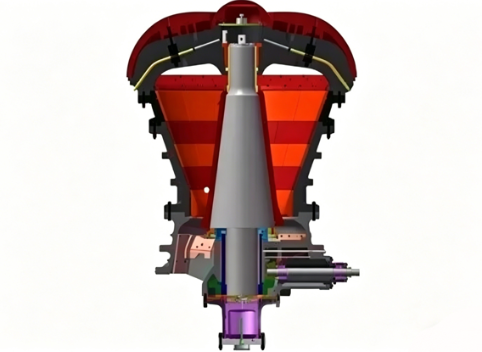
Application Scope: Suitable for rocks of all hardness levels. Generally used as primary crushing equipment in aggregate production lines; small models can also be applied in secondary crushing.
Cone Crusher
Advantages: Reliable operation, high output, uniform product size, and low liner wear.
Disadvantages: Complex structure, high maintenance requirements, large installation height, and high cost.
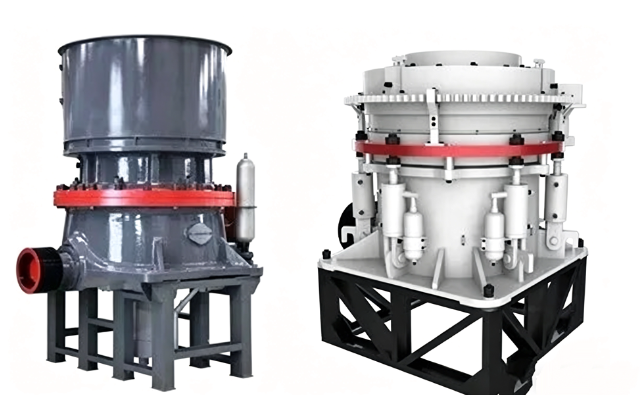
Application Scope: Good adaptability to various rock hardness. It is the most commonly used secondary or fine crushing equipment in aggregate production lines.
Impact Crusher
Advantages: Impact crusher has large crushing ratio, fine product size, excellent particle shape. Impact crusher with low energy consumption, and simple structure.
Disadvantages: Blow bars and liners of impact crushers are prone to wear, resulting in heavy workload for replacement and maintenance; serious dust emission, impact crusher is not suitable for crushing plastic and viscous materials.
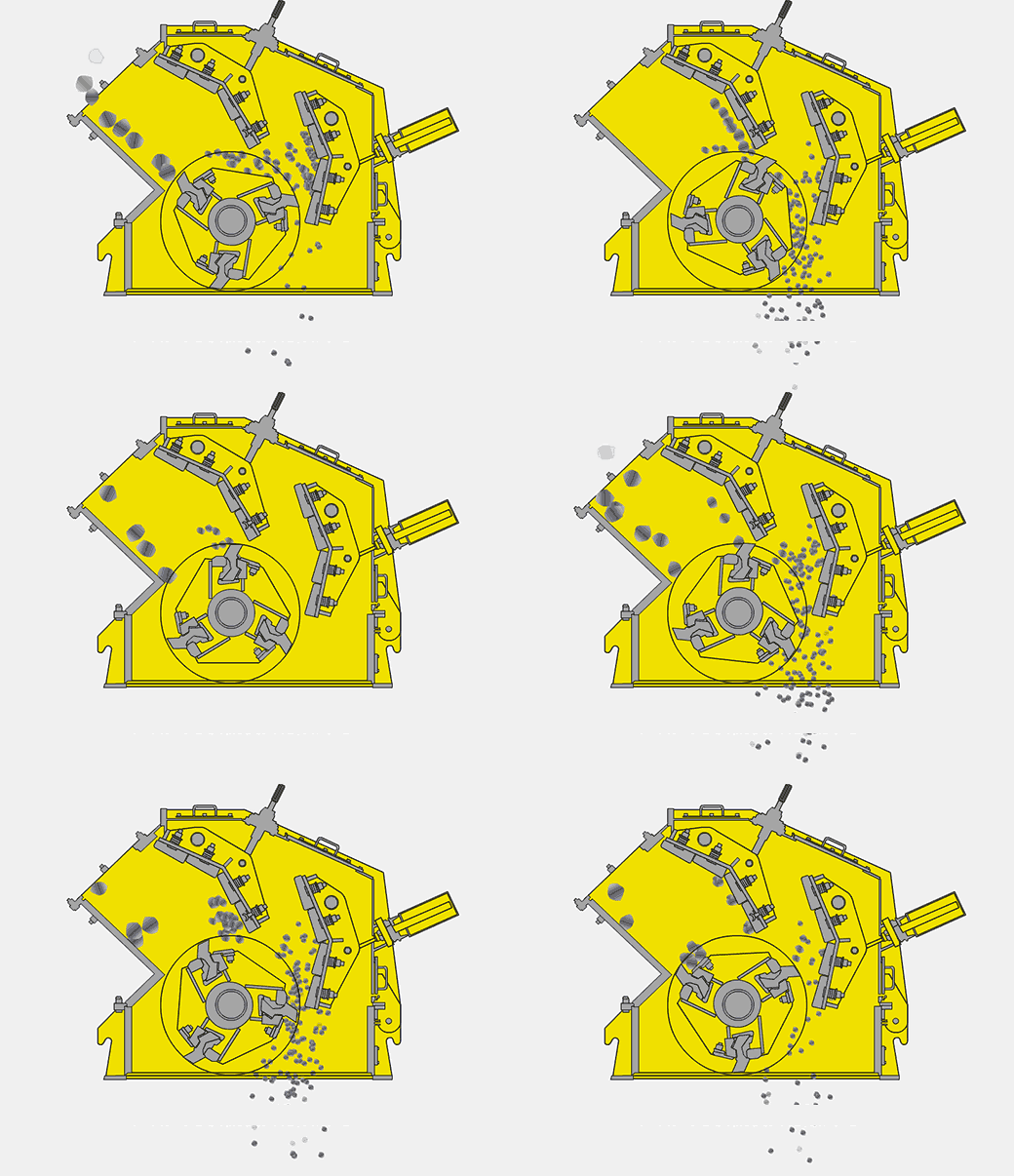
Application Scope: Impact crusher is suitable for crushing medium-hard rocks, used in secondary crushing and sand making. At present, some large-scale models of impact crushers are also applied in primary crushing.
Hammer Crusher
Advantages: Large crushing ratio, high output, good product particle shape and high proportion of fine materials.
Disadvantages: Hammers wear out rapidly and require frequent replacement; heavy dust emission during operation; ineffective processing of materials with moisture content over 12% and viscous materials.
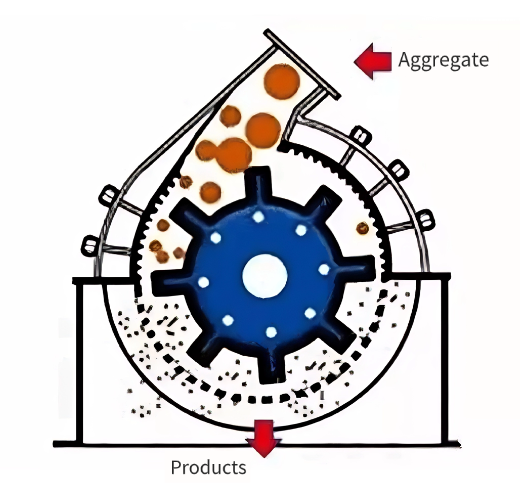
Application Scope: Suitable for crushing medium-hard rocks, generally used as fine crushing equipment; equipped with grates for sand making, but its application has been relatively limited in recent years.
For large and ultra-large aggregate production lines, large-scale crushing equipment matching the production scale shall be adopted. The number of crushing equipment for the same process shall be no less than 2 sets. Priority shall be given to finalized, mature products featuring high efficiency, energy saving and environmental protection.