

Particle/Powder screening is the process of classifying mixed materials with different particle sizes into various size grades through screen apertures. The commonly used equipment mainly includes the following types:
Vibrating Screen
Vibrating screens are the most widely used screening equipment in various industrial fields. They can be applied to the separation of solids from liquids, the classification of different particle sizes within the same product, safety screening to remove foreign matters, particle homogenization, and other processes.
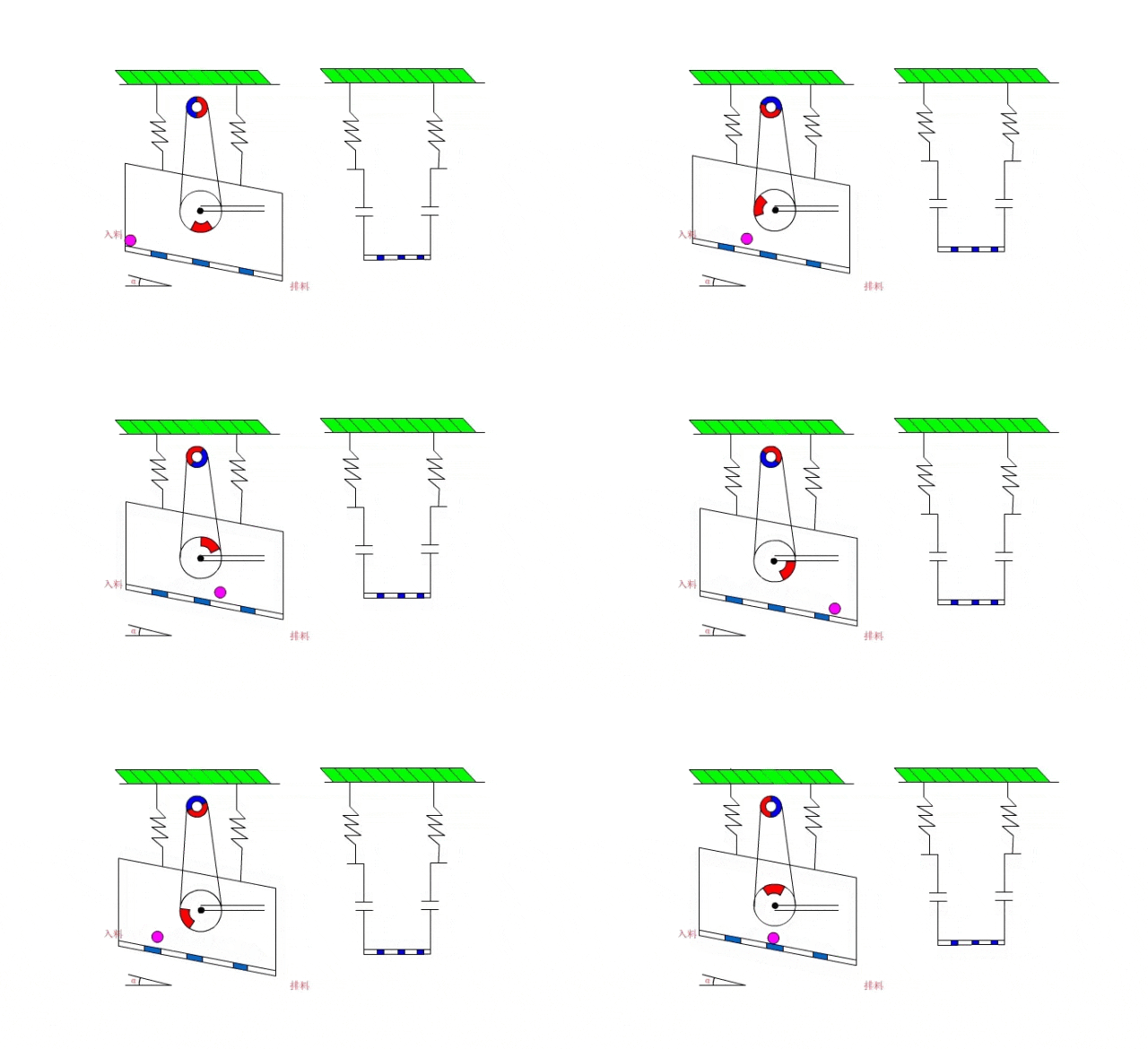
Its working principle is that the screen surface is installed at an inclined angle to the ground. Under the combined action of gravity and the exciting force provided by the vibration motor, materials move in a fixed direction on the screen mesh, and materials of different particle sizes are obtained through multi-layer screening.
Rotary Screen
The biggest difference between a rotary screen and other screening equipment is that it does not require a vibration motor to generate excitation force.
According to different driving modes of the drum, it can be divided into shafted rotary screen and shaftless rotary screen.
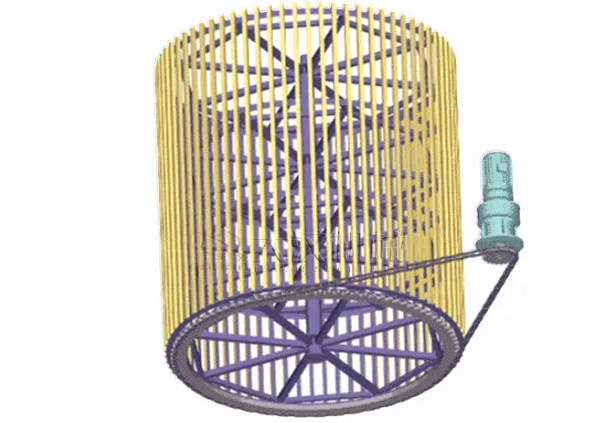
Working Principle of Shafted Rotary Screen:The installation angle of the screen mesh enables materials to undergo 360° all-directional screening on the screen surface.
Shafted Rotary Screen
The motor is connected to the drum unit via a reducer and coupling, driving the drum unit to rotate around its axis. This causes the material on the screen surface to tumble, effectively preventing screen aperture blockage. It is commonly used for separating materials with irregular block sizes.
Shaftless Rotary Screen
Designed with a central shaftless structure, it adopts various transmission modes such as chain drive, gear drive, and idler drive. The larger internal screening space increases processing capacity by nearly 20%.
Gyratory Screen/ Swing Screen
The gyratory screen largely imitates and optimizes the action of a traditional sieve. By adjusting eccentricity, radial angle and tangential angle, the machine generates horizontal and throwing tumbling motions.
According to different motion patterns, it can be divided into circular gyratory screens and square gyratory screens.
Circular Gyratory Screen
Materials are evenly distributed from the center to the outer edge across the entire screen surface, and spread axially in a spiral motion with planar gyratory movement. During this process, small particles close to the screen aperture size are successfully separated as they disperse.
It is widely used for screening, classifying and dedusting dry powder and granular products, especially for difficult-to-screen materials that are fine, brittle or light, such as PVC, diatomite, sodium sulfate, etc.
Square Swing Screen
After startup, the internal exciter generates an eccentric force. Driven by inertia, the screen box drives the screen surface to perform periodic reciprocating shaking. This allows materials to spread rapidly on the screen surface and move forward closely against the screen mesh, so that particles smaller than the screen aperture quickly pass through to the lower layer, thus completing the screening process.
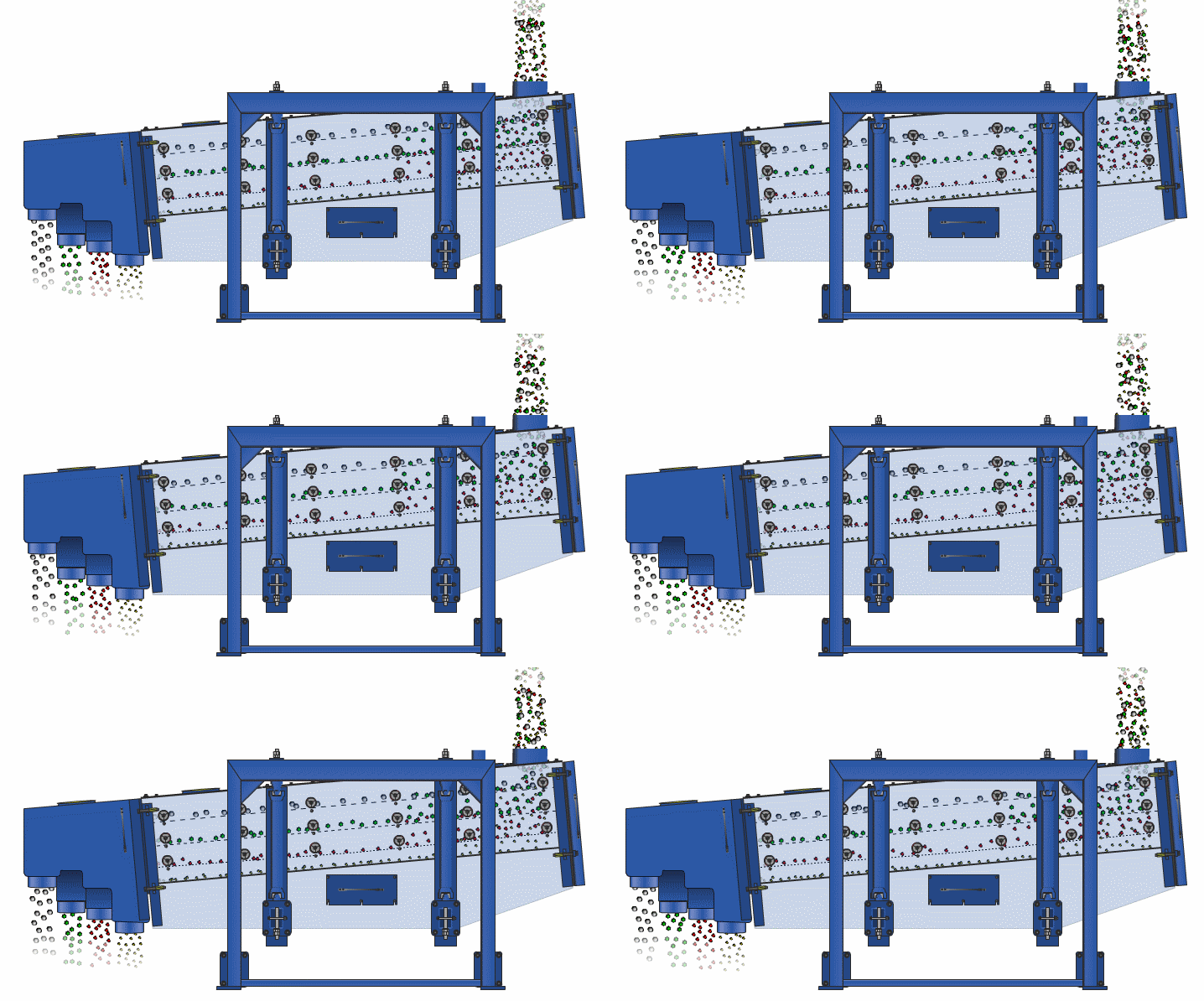
During the rocking motion, materials travel a relatively long path within a small screening area and have a longer contact time with the screen mesh compared with other screening equipment. This effectively improves screening accuracy and efficiency. It is the preferred equipment for materials requiring fine particle size classification, such as calcium carbonate, soda ash, perlite, etc.
Each of these equipment and methods has its own advantages and applicable scenarios. Selecting the appropriate equipment can effectively enhance screening efficiency and precision.