

Limestone is a dominant material in the crushing and sand-making industry, widely applied in construction and industrial sectors. This article takes a 1,000 TPH limestone aggregate production line as a typical example, elaborating on its core design details, with a focus on the impact crusher and overall configuration, for industry reference.
Characteristics and Distribution of Limestone
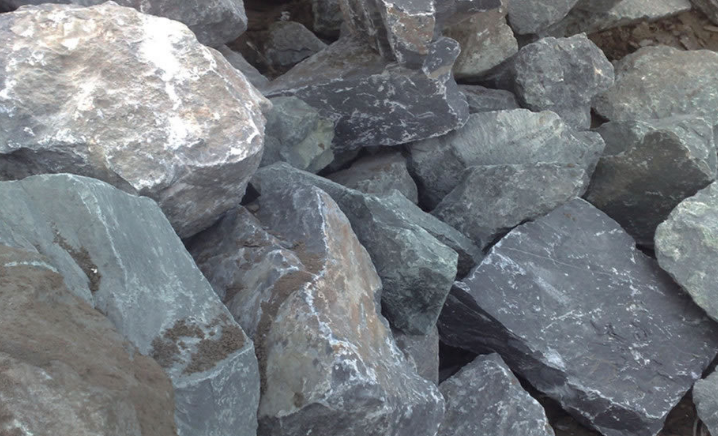
Limestone, mainly composed of calcium carbonate (CaCO₃), has a specific gravity of 2.7 (referring to the stone material itself, not bulk density), medium hardness and low abrasiveness—properties that make it well-suited for processing in limestone aggregate production lines. limestone reserves are unevenly distributed: over 60% in the Asia-Pacific, nearly 25% in North America and Europe combined, and approximately 15% in South America, the Middle East & Africa.
Equipment Selection
For limestone aggregate production lines, three common crusher configurations are adopted, all incorporating the impact crusher for its superior particle shaping. The configurations are: Jaw Crusher + Impact Crusher; Jaw Crusher + Cone Crusher + Shaping Machine + Impact Crusher (for higher quality); Hammer Crusher + Impact Crusher. For this 1,000 TPH limestone aggregate production line (10% soil removal, finished ratios: 20–31.5mm:18%, 10–20mm:25%, 5–10mm:17%, 0–5mm:25%), the two-stage Jaw + Impact Crusher is selected. This combination suits the limestone aggregate production line well, as the impact crusher ensures good gradation and low stone powder content, with low investment, energy consumption, moderate maintenance costs and controllable environmental impact.
Process Flow
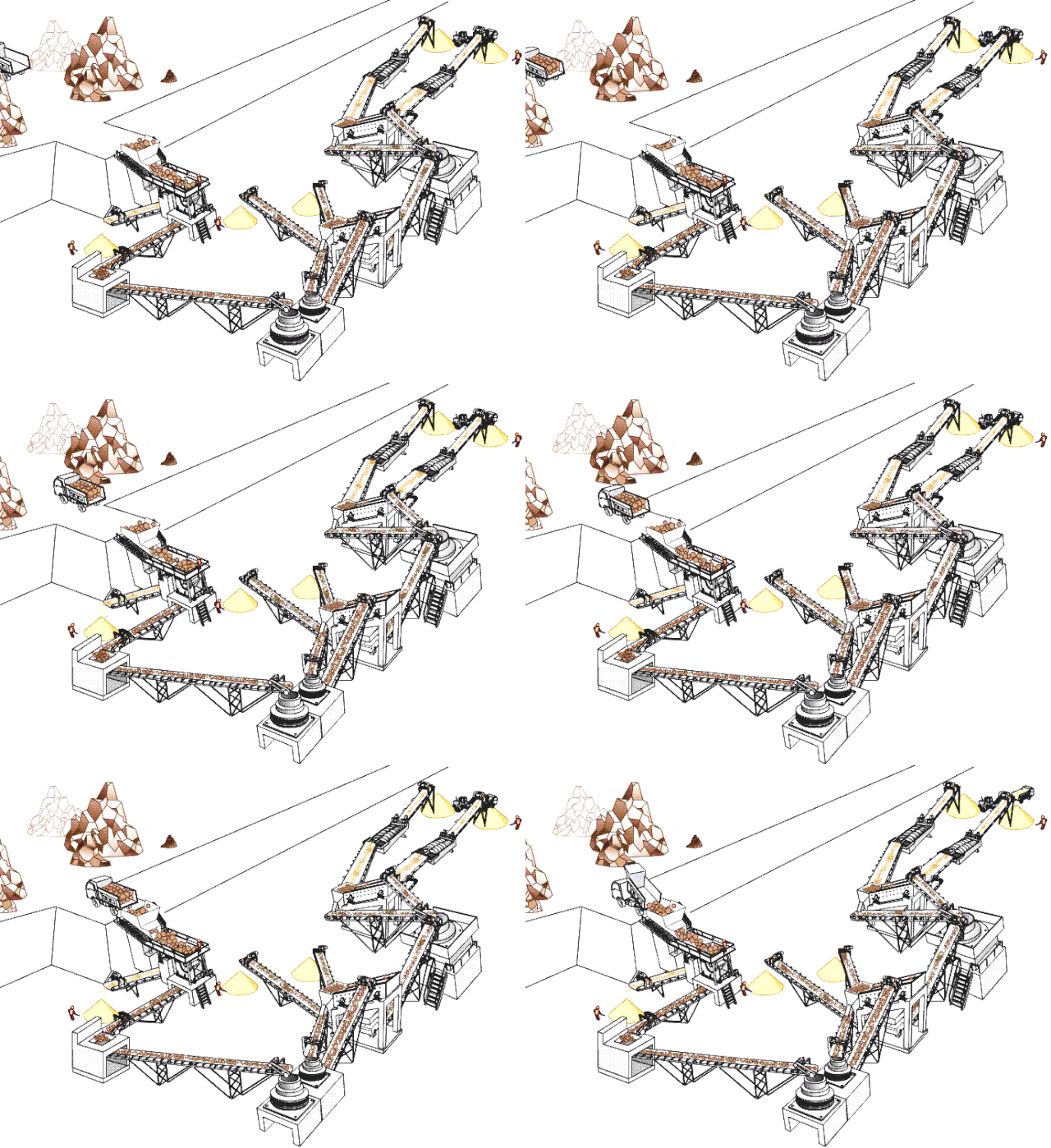
The limestone aggregate production line comprises 12 core units, forming a workflow centered on the impact crusher. Units include: primary crushing & conveying, soil removal & screening, secondary crushing & conveying (via impact crusher), primary/secondary screening & conveying (classifying impact crusher outputs), finished storage & shipment, powder conveying & bulk loading, compressed air system, weighing system, water supply & treatment, electrical automation system, and spare parts & maintenance center. Each unit coordinates to ensure the production line runs stably, with the impact crusher pivotal in secondary crushing.
Layout Design
The layout utilizes on-site elevation differences: unloading platform (243.60m), primary crushing area (228.60m), and other units (including impact crusher, secondary screening) (217.00m). Belt conveyors are set at maximum feasible angles to save space, with the limestone aggregate production line's total area at 21,000m². The impact crusher and other equipment are installed on a one-story reinforced concrete frame with independent foundations, reducing vibration and easing maintenance. Due to limited space, screened aggregates are lifted to silos by bucket elevators. A 430 t buffer silo (instead of stockpile) saves investment but may halt the impact crusher and downstream equipment if primary crushing malfunctions. Four 16m steel silos store finished aggregates, balancing cost, period, environmental protection and automation for the limestone aggregate production line.
Environmental Protection
This limestone aggregate production line adopts a dry process, avoiding water pollution. Noise is controlled by vibration reduction, flexible connectors (for impact crusher and vibrating equipment) and enclosed workshops. Dust control measures include: enclosed dust-generating units (impact crusher, crushing/screening) with air ducts, fully enclosed conveyor corridors, air leakage control, chain conveyors for impact crusher dust collector powder (preventing secondary dust), and silo-top dust collectors for the 100t powder silo and four 4,000t finished aggregate silos, ensuring the production line meets environmental standards.
Production Safety
It is designed per safety standards. Main equipment, including impact crusher, jaw crusher and vibrating screens, is placed on the first floor with sufficient maintenance space and headroom. Protective railings are installed around platforms. The layout includes safety passages, and inspection walkways beside the impact crusher and other equipment meet width requirements, ensuring safe operation of the production line.
Summary
After commissioning, the 1,000TPH limestone aggregate production line meets design requirements, with outputs: 20–31.5mm (205t/h), 10–20mm (325t/h), 5–10mm (186t/h), 0–5mm (280t/h). The impact crusher is key to achieving quality particle shape and compliant flaky content. High-performance limestone aggregate production lines must balance product quality, safety, easy maintenance, energy conservation, automation and cost-efficiency, adapting to rock properties and site conditions, with the impact crusher as a core component.